

Zain Khalpey: New Perspectives on Cardiovascular Risk in Women’s Health
Zain Khalpey, Chief Medical AI Officer, Chair of Applied Clinical AI, Director, Khalpey AI Lab at ATARI AI, shared a post on LinkedIn about a paper by Yolande Appelman et al. published in European Heart Journal:
“Cardiovascular disease is the leading cause of death in women, yet it is still underrecognized and often diagnosed too late.
This European Heart Journal review highlights how traditional risk factors interact with sex specific factors such as pregnancy complications, menopause, autoimmune disease, and hormonal changes that begin as early as the premenopausal years.
The authors call for a shift toward lifelong, sex specific prevention, earlier detection of preclinical disease, and tailored treatment pathways to reduce cardiovascular risk in women.
Read the full article.
Follow Zain Khalpey for more on Ai and Healthcare.”
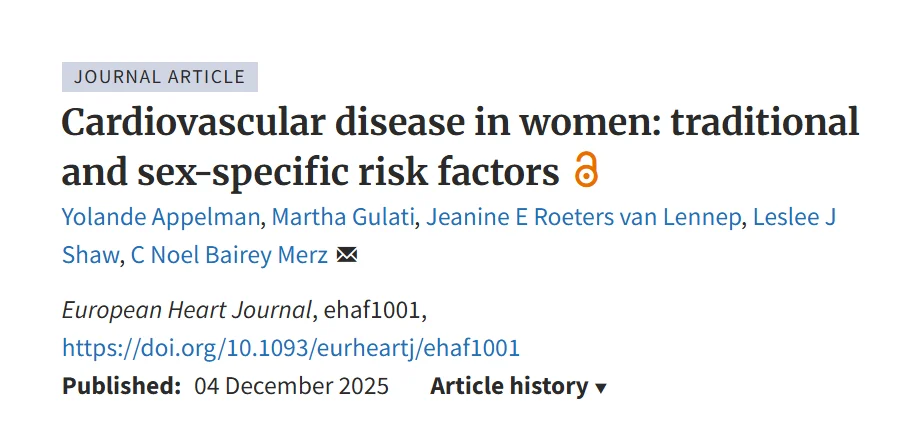
Title: Cardiovascular disease in women: traditional and sex-specific risk factors
Authors: Yolande Appelman, Martha Gulati, Jeanine E Roeters van Lennep, Leslee J Shaw, C Noel Bairey Merz
Stay updated on all scientific advances in the field of fertility with Fertility News.
-
Oct 21, 2026, 17:57Ula Sankowska: What I’ll Bring to ASRM INNOVATE in Baltimore
-
Oct 21, 2026, 17:40Robert Borowczyk: The Invisible Waiting Room
-
Oct 21, 2026, 17:35Fereshteh Safian: Behind the Scenes of Reproductive Medicine
-
Oct 21, 2026, 17:20The Relationship Between Trophectoderm Biopsy and Early Pregnancy Outcomes – RBMO
-
Oct 21, 2026, 17:09Jules McDonald: The Future of Fertility Is Happening in Abu Dhabi
-
Oct 21, 2026, 16:53Ashley Evans: I Never Imagined I’d Be a Fertility Story with a Group of People Whom I Have Never Met…
-
Oct 21, 2026, 16:41Karthik Raj: Asherman’s Syndrome – When the Endometrium Cannot Regenerate Normally
-
Oct 21, 2026, 16:36Katy Encalade: A Few Misconceptions I Think Every Woman Considering Egg Donation Deserves to Understand
-
Oct 21, 2026, 16:21The FeRGI Working Group 2026-2027 – ESHRE SIG Reproductive Genetics