

Vipin Chandra: Impact of Environmental Pollution on Sperm DNA Fragmentation
Vipin Chandra, Chief of Clinical and Lab Operations at Indira IVF, shared a post on LinkedIn:
“Can air pollution silently impact male fertility? Our recent real-world data suggests—yes, significantly.
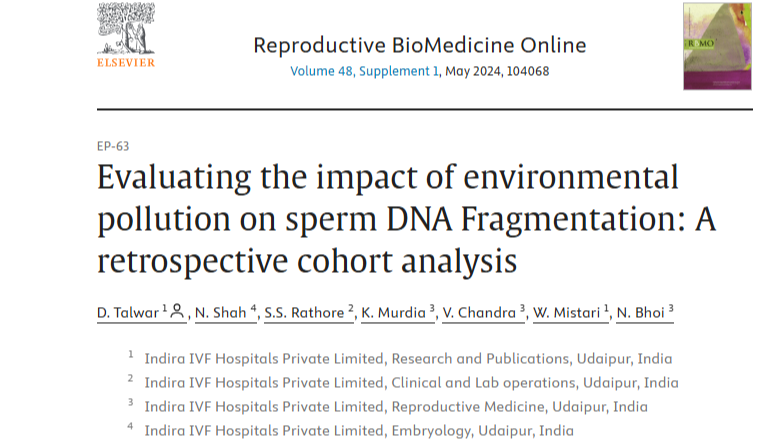
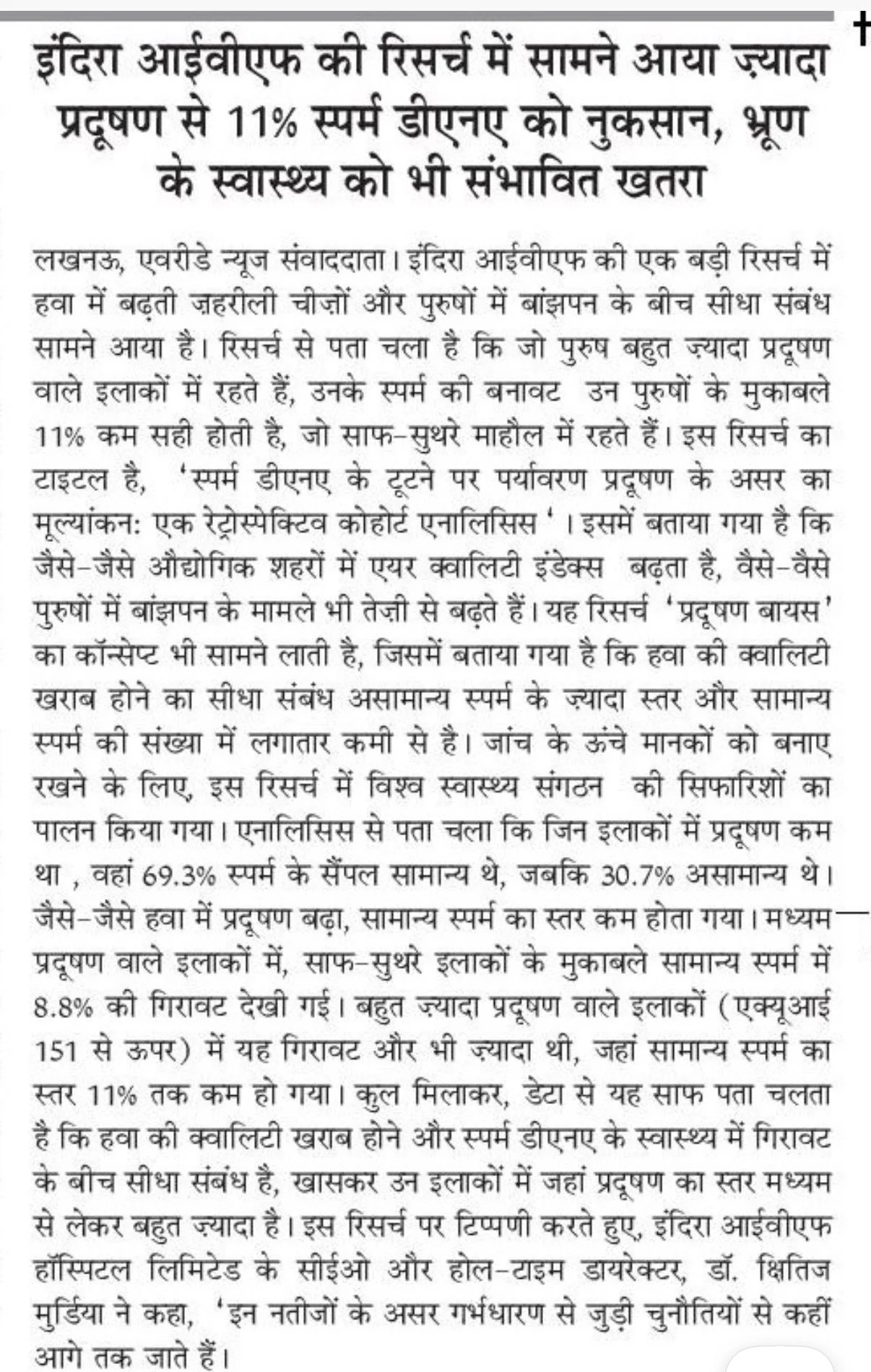
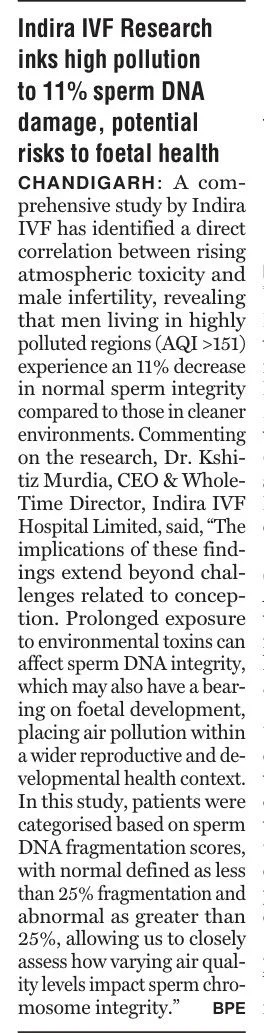
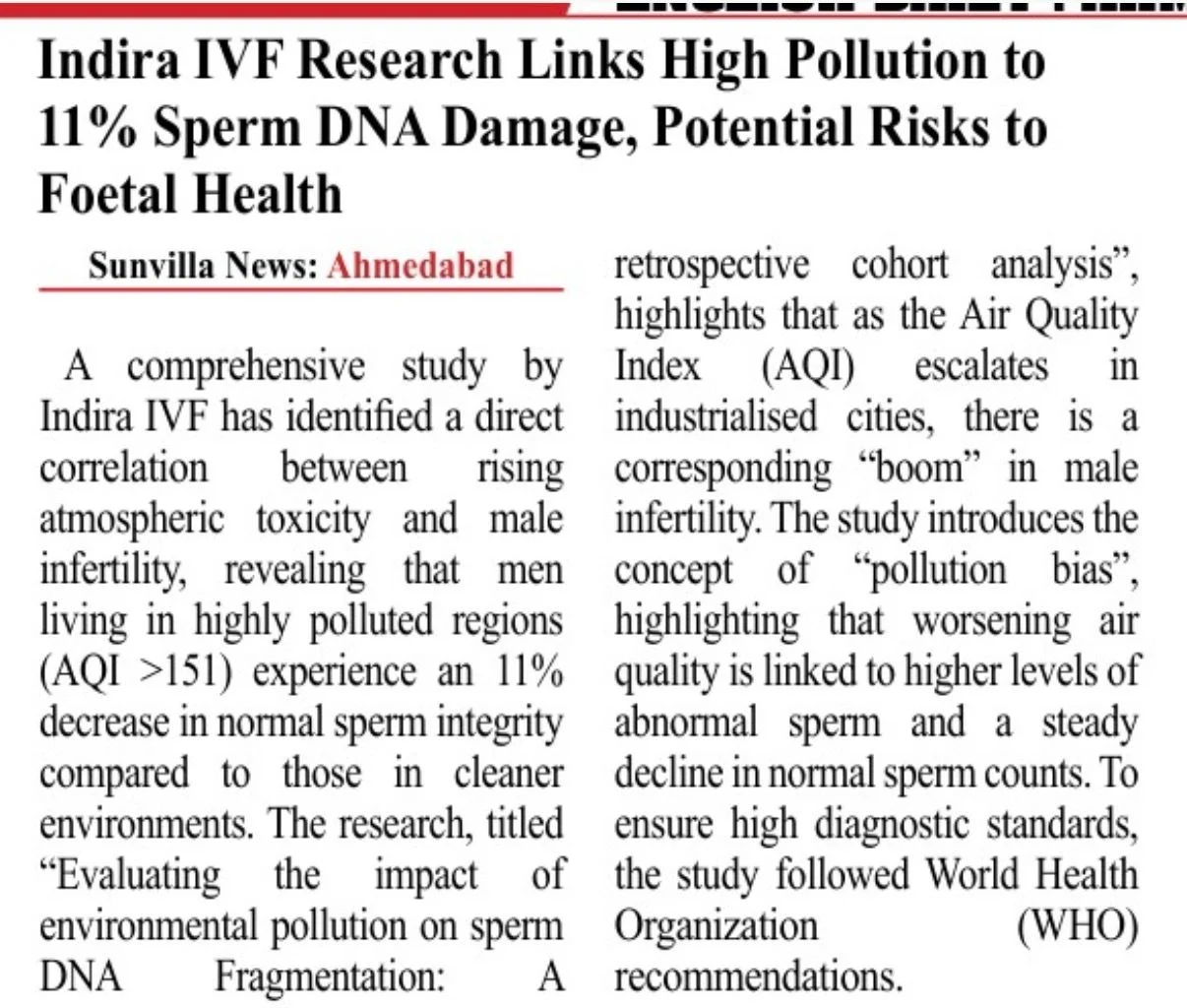
I’m pleased to share that our study titled ‘Evaluating the impact of environmental pollution on sperm DNA fragmentation: A retrospective cohort analysis’ has been accepted and published in RBMO (Reproductive BioMedicine Online), with findings also featured across multiple national media platforms like Metro India, Sunvilla Samachar, Everyday News, BW Businessworld, Mid-Day, ETV Bharat, Lucknow News, News Achivers, Bright Punjab Express, Express Healthcare, India Med Today, Business Upturn, Business News This Week, Business Frontliner, Mango Bunch, Pulsexpertech, Business News for Profit, Biz Rapid X, Quick Biz News. This research reflects an important direction for us at Indira IVF—generating real-world, large-scale clinical evidence that is directly relevant to everyday infertility practice.
Conducted across 3,200+ patients from 120 centers, this study evaluated the relationship between Air Quality Index (AQI) and sperm DNA fragmentation (DFI)—an increasingly critical yet under-recognized factor in male fertility.
Key clinical insights:
- In low pollution regions, ~69% samples had normal DNA integrity
- With rising AQI, there was a progressive increase in abnormal sperm DNA fragmentation
- In highly polluted zones (AQI >151), there was ~11% decline in normal sperm integrity
- A clear ‘pollution bias’ trend—higher pollution correlated with greater DNA damage
Why this matters clinically:
While traditional semen analysis focuses on count, motility, and morphology, this study reinforces that DNA integrity is equally crucial, particularly in:
- Recurrent IVF/ICSI failure
- Recurrent pregnancy loss
- Unexplained infertility
How this changes our approach:
- More evidence-based patient counselling on environmental and lifestyle impact
- Better integration of DFI testing in selected clinical scenarios
- Focus on preventive strategies (antioxidants, exposure reduction, lifestyle optimization)
- More realistic ART outcome expectations in high AQI regions
At Indira IVF Group and Indira Fertility Academy , we believe that advancing fertility care is not only about technology—but also about understanding real-world factors that influence reproductive outcomes. Personally, it is deeply satisfying to see how clinical observations translate into meaningful data—and how that data improves patient care.
Because sometimes, the most important factor affecting fertility is not inside the lab—but in the air we breathe.
For more detail on study abstract please click on the link”.
Title: Evaluating the impact of environmental pollution on sperm DNA Fragmentation: A retrospective cohort analysis
Authors: D. Talwar, N. Shah, S.S. Rathore, K. Murdia, V. Chandra, W. Mistari, N. Bhoi
Stay updated on all scientific advances in the field of fertility with Fertility News.
-
Oct 24, 2026, 16:33Clare Mansfield: Flowering Fertility Support Programme Was Independently Evaluated by Health Innovation Hub Ireland
-
Oct 24, 2026, 16:17Diana Tain: Vitrification May Affect Oocyte Resilience Without Causing Chromosomal Instability
-
Oct 24, 2026, 16:02Albert Irkaliev: Peptides and the Future of ART
-
Oct 24, 2026, 15:57Resa Nabor: A Filipino Woman’s Journey of Faith, Infertility, and Unwavering Love
-
Oct 24, 2026, 15:41Esther Eleboh: Comparison of IVF Ovarian Stimulation Protocols
-
Oct 23, 2026, 17:34Breast Cancer Awareness Month: Supporting Women Through Every Journey – Egg Donor and Surrogate Solutions
-
Oct 23, 2026, 17:28Demián Glujovsky: What Happens to Fertility Patients Between Visits?
-
Oct 23, 2026, 17:21Stephen Parker Ellington: Empathetic Fertility Care Can Scale, Even When Your Team Can’t
-
Oct 23, 2026, 17:16ACOG Releases New Guidance on the Use of GLP-1s in Pregnancy and Lactation