
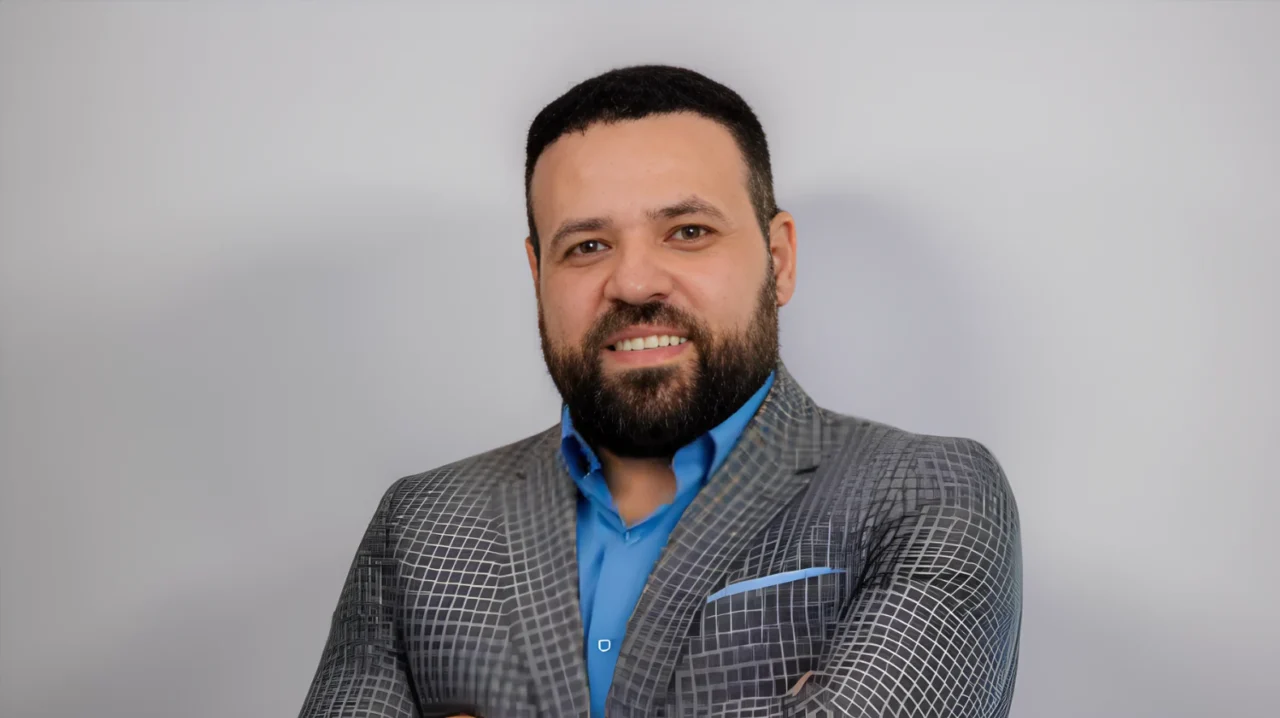
Abdelrahman H. Daifalla: DISS Clinical Intelligence – The New Generation of IVF Management
Abdelrahman H. Daifalla, Medical Director and Consultant IVF/ICSI at Queens Medical Center and Consultant of IVF and Reproductive Medicine at Gannah IVF Hospital, shared on LinkedIn:
“We have better IVF technology than ever.
But are we still managing patients with an old model?
This is the question behind DISS Clinical Intelligence and the idea of a new generation of IVF management.
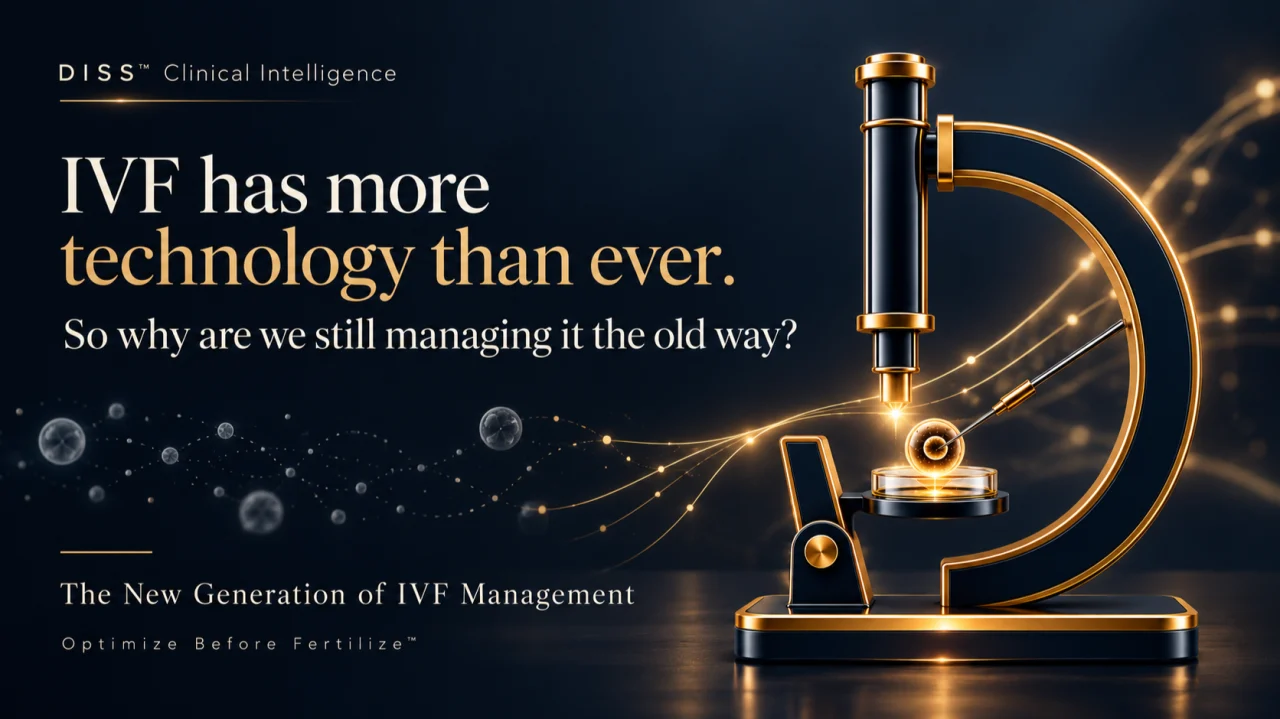
The New Generation of IVF Management
IVF has more technology than ever. So why are we still managing it the old way?
We have better incubators. Better imaging. Better stimulation protocols. More genetic testing. More data. More AI.
And yet, in many clinics, the management model itself has barely changed.
That is the uncomfortable part.
- We keep adding new technologies to an old workflow.
- We optimize stimulation.
- We optimize the laboratory.
- We optimize embryo selection.
But are we truly optimizing the patient before the cycle begins?
Or are we still starting treatment with fragmented information, incomplete readiness assessment, and decisions heavily dependent on what happens to be noticed during a busy consultation?
This is the problem I believe reproductive medicine needs to confront.
IVF Has an Intelligence Gap
The problem is not a lack of data.
The problem is that the data is often disconnected.
Hormones are reviewed separately.
Ultrasound findings are reviewed separately.
Male-factor data may be treated as another isolated report.
Previous IVF cycles, medical conditions, genetics, uterine factors, embryology history, metabolic factors, and patient readiness may all exist – but not necessarily as one integrated clinical picture.
That is not a data problem.
It is a clinical intelligence problem.
And adding another prediction algorithm on top of fragmented data will not solve it.
Prediction Is Not Enough
The fertility field is increasingly fascinated by prediction.
- Who will respond?
- Who will implant?
- Who will achieve a live birth?
These are important questions.
But there is a more important one:
What can we change before treatment starts?
If an AI system tells me that a patient has a low probability of success, that may be useful.
But if it cannot explain:
- Why?
- What is missing?
- What is modifiable?
- What should be optimized first?
then it is not changing IVF management.
It is simply giving a more sophisticated prognosis.
IVF needs to move from predicting failure to preventing avoidable failure.
We May Be Starting IVF Too Early
This may be one of the most uncomfortable questions in our field:
How many IVF cycles begin before the patient is truly ready for IVF?
Not administratively ready.
Not financially ready.
Not ‘protocol-selected’ ready.
Clinically optimized.
- A hydrosalpinx matters.
- A uterine cavity problem matters.
- Uncontrolled endocrine disease matters.
- Male-factor abnormalities matter.
- Metabolic health matters.
- Genetics matter.
- Previous embryology performance matters.
And sometimes what has not yet been investigated matters even more.
Yet these factors are often evaluated in separate silos rather than through one structured readiness model.
Why?
Because IVF has historically been built around the cycle.
Perhaps the next generation should be built around the patient.
This Is the Idea Behind DISS
DISS – Daifalla IVF Success System – is being developed around a different philosophy:
Do not start with the protocol. Start with readiness.
DISS Clinical Intelligence is designed to capture and interpret clinical information, identify what may have been missed, assess readiness across five major clinical pillars, and convert that information into an actionable patient roadmap.
The concept is:
Capture. Interpret. Discover. Assess. Optimize. Personalize. Predict.
Not simply:
Input – Score – Probability.
Because patients are not probabilities.
And physicians do not need another dashboard full of numbers.
They need intelligence that changes the next clinical decision.
Optimize Before Fertilize
This principle sounds obvious.
But our workflows do not always reflect it.
Before stimulation begins:
- What are we missing?
- What is modifiable?
- What is a red flag?
- What should delay treatment?
- What could improve the patient’s readiness?
- What is unlikely to change and therefore needs to be incorporated into prognosis?
- And what should the physician do next?
That is where Clinical Intelligence becomes clinically meaningful.
AI Should Not Replace the IVF Physician
The goal of AI in reproductive medicine should not be to replace physicians.
That is the wrong ambition.
The better ambition is to create a physician who can see more, miss less, integrate faster, and make more consistent decisions.
AI should not compete with the IVF physician. It should amplify the IVF physician.
The physician remains the decision-maker.
Clinical Intelligence becomes the cognitive infrastructure around that decision.
The Real Innovation May Not Be Another Device
For decades, reproductive medicine has been driven by technological innovation.
Better incubators. Better catheters. Better imaging. Better laboratory systems. Better embryo assessment.
All important.
But perhaps one of the biggest remaining opportunities is much less visible:
How we manage the patient before, during, and after the IVF cycle.
The future may not be another machine in the laboratory.
It may be an intelligence layer connecting the entire patient journey.
The Question for IVF Leaders
If we rebuilt IVF management from zero today – with modern data, modern AI, modern clinical evidence, and decades of accumulated reproductive medicine experience –
would we design the same workflow we use now?
I doubt it.
And that is precisely why I believe IVF needs a new generation of management.
Not another isolated tool.
Not another calculator.
Not another algorithm.
A connected clinical intelligence system.
DISS Clinical Intelligence
The New Generation of IVF Management.
From treating cycles to managing readiness. From fragmented data to clinical intelligence. From predicting outcomes to optimizing them.”
Other articles featuring Abdelrahman H. Daifalla on Fertility News.
-
Oct 22, 2026, 17:36Filipa Rafael: A Woman Should Not Have to Be Trying for a Baby for Her Ovarian Insufficiency to Matter
-
Oct 22, 2026, 17:30Michele Boiani: New Insight on Zona Pellucida Proteins
-
Oct 22, 2026, 17:01Sean Lauber: New Review Assesses PGT-A Effectiveness and Safety
-
Oct 22, 2026, 16:56Eric Lameignere: Optimizing Sperm Handling Conditions in the IVF Laboratory
-
Oct 22, 2026, 16:49Rajeev Agarwal: Most Failed IVF Transfers Are About the Embryo, Not the Uterus
-
Oct 22, 2026, 16:44Devyanshi Dixit: Calling for Delegates for GFWH 2026
-
Oct 22, 2026, 16:35Kate Ryder: Headed to ASRM 2026 and Looking Forward to Spending Time with Clinic Partners
-
Oct 22, 2026, 16:27Can PCOS/PMOS Increase the Risk of Premature Death? – PCOS Millennials
-
Oct 22, 2026, 16:18Margaret Cali: Before IVF Begins, a Lot of Preparation Happens…