

Kothwal Jabeen: IVF – A Journey of Hope, Science, and New Beginnings
Kothwal Jabeen, Research and Documentation Intern at Clinivance TechLabs, shared on LinkedIn:
”IVF: Understanding the Journey to Parenthood
From ovarian stimulation and egg retrieval to fertilization, embryo development, embryo transfer, and pregnancy testing, IVF involves several carefully coordinated stages.
This article explains the IVF process step by step in a simple and easy-to-understand way, helping replace misconceptions with accurate information.
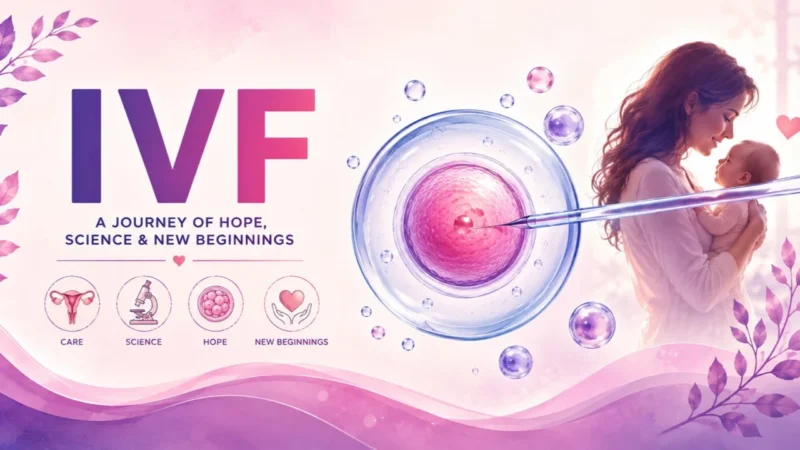
Introduction:
Many people face difficulties with natural conception, so in vitro fertilization (IVF) can offer another path toward pregnancy.
What Actually Happens During the IVF Process?
Many people have heard the term ‘IVF’ or ‘test tube baby,’ but they may not know what happens from the beginning of treatment to embryo transfer.
- IVF – is a form of assisted reproductive technology (ART) in which eggs and sperm are handled in the laboratory to help achieve fertilization. The resulting embryo can then be transferred into the uterus.
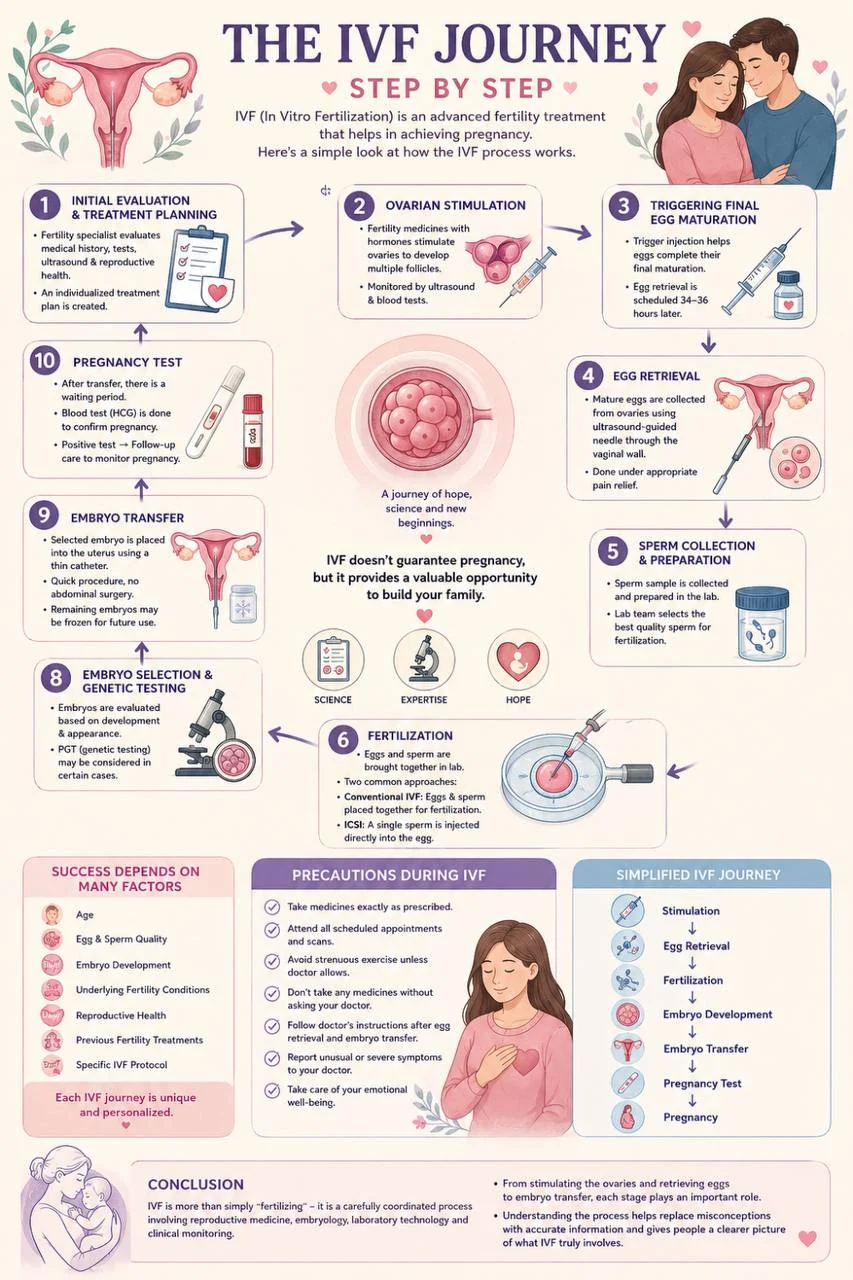
IVF Process Step by Step
Step 1: The Initial Evaluation and Treatment Planning
- Before starting IVF treatment, the fertility specialist evaluates the individual or couple.
- This includes the patient’s medical history, fertility assessment, blood tests, ultrasound examinations, and evaluation of reproductive health.
- Based on these findings, the fertility specialist develops an individualized treatment plan.
Step 2: The Ovarian Stimulation
- Normally, the ovaries may release one mature egg during the menstrual cycle
- During IVF, fertility medicines containing hormones are commonly used to stimulate the ovaries to develop multiple follicles and eggs.
- The response is monitored through ultrasound examinations and appropriate blood tests.
- The main purpose is to obtain multiple mature eggs, which can provide more opportunities for fertilization and embryo development.
Step 3: Triggering the Final Egg Maturation
- When the follicles have developed sufficiently, a medication known as the trigger injection is given to help the eggs complete their final maturation.
- Timing of this medication is very important because egg retrieval is generally scheduled approximately 34–36 hours afterward, depending on the treatment protocol.
Step 4: The Egg Retrieval
- Egg retrieval, also known as oocyte retrieval, is a procedure used to collect mature eggs from the ovaries.
- A clinician typically uses ultrasound guidance to pass a needle through the vaginal wall and into the ovarian follicles to collect the eggs.
- This procedure is generally performed with appropriate pain relief.
- The retrieved eggs are taken to the embryology laboratory.
Step 5: The Sperm Collection and Preparation
- A sperm sample is collected and prepared in the laboratory.
- The laboratory team evaluates and processes the sample to identify suitable sperm for fertilization.
- In some cases, sperm may need to be obtained through a medical procedure rather than ejaculation.
Step 6: The Fertilization
- The retrieved eggs are prepared, and sperm are brought together in the laboratory.
The Two Commonly Used Approaches Are:
Conventional IVF:
The eggs and sperm are placed together under laboratory conditions so that fertilization can occur.
Intracytoplasmic Sperm Injection (ICSI):
- A single sperm is injected directly into the egg using a specialized microscopic technique.
- ICSI may be recommended in certain situations, particularly when there are specific sperm-related fertility concerns or previous fertilization problems.
Step 7: Embryo Development
- If fertilization occurs, the resulting embryos are kept under carefully controlled laboratory conditions.
- Embryologists monitor their development over the following days.
- Embryos develop through several stages, eventually reaching the blastocyst stage, which is typically around day 5 or 6 after fertilization.
- Not every fertilized egg will continue developing into a suitable embryo.
Step 8: Embryo Selection and Genetic Testing
- Depending on the clinical situation, embryos may be evaluated based on their development and appearance.
- In certain circumstances, preimplantation genetic testing (PGT) may be considered to examine embryos for specific genetic conditions.
- PGT is not required for every IVF cycle and is used based on individual circumstances and medical advice.
Step 9: The Embryo Transfer
- An embryo is selected for transfer and placed into the uterus using a thin catheter passed through the cervix.
- This procedure is usually relatively quick and does not require surgery through the abdomen.
- If implantation subsequently occurs, the embryo will continue developing in the uterus.
- Sometimes, embryos that are not transferred immediately may be cryopreserved for possible future use.
Step 10: The Pregnancy Test
- After embryo transfer, there is a waiting period before pregnancy can be assessed.
- A blood test is generally used to measure human chorionic gonadotropin (hCG), a hormone associated with pregnancy.
- If the test is positive, follow-up care is arranged to monitor the pregnancy.
Does IVF Always Result in Pregnancy?
The answer is no.
- IVF can provide an opportunity for pregnancy, but it does not guarantee implantation, pregnancy, or a live birth.
Success Will Vary Depending on Factors Such As:
- Age
- Egg and sperm quality
- Embryo development
- Underlying fertility conditions
- Reproductive health
- Previous fertility treatment
- The specific IVF protocol
- For all these reasons, IVF treatment is individualized for each patient.
Precautions Used During IVF Treatment
- Take the medicines exactly as prescribed.
- Attend all scheduled appointments and scans.
- Avoid strenuous exercise unless your doctor allows it.
- Do not take any medicines without consulting your doctor.
- Follow your doctor’s instructions after egg retrieval and embryo transfer.
- Report any unusual or severe symptoms to your doctor.
- Take care of your emotional well-being.
Simple Way to Understand the IVF Journey
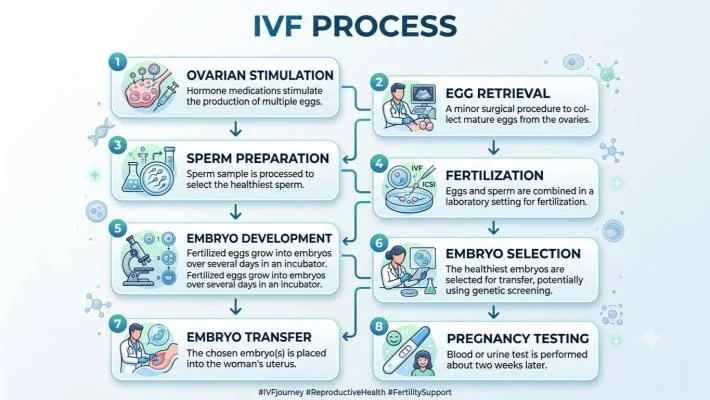
Conclusion -IVF is more than simply fertilizing; it is a carefully coordinated process that involves reproductive medicine, embryology, laboratory technology, and clinical monitoring.
- From stimulating the ovaries and retrieving eggs for fertilization, embryo development, and embryo transfer, each stage plays an important role.
- Understanding the process will help replace misconceptions with accurate information and give people a clearer picture of what IVF actually involves.”
Stay informed with the latest updates in fertility and reproductive medicine on Fertility News.
-
Oct 22, 2026, 17:36Filipa Rafael: A Woman Should Not Have to Be Trying for a Baby for Her Ovarian Insufficiency to Matter
-
Oct 22, 2026, 17:30Michele Boiani: New Insight on Zona Pellucida Proteins
-
Oct 22, 2026, 17:01Sean Lauber: New Review Assesses PGT-A Effectiveness and Safety
-
Oct 22, 2026, 16:56Eric Lameignere: Optimizing Sperm Handling Conditions in the IVF Laboratory
-
Oct 22, 2026, 16:49Rajeev Agarwal: Most Failed IVF Transfers Are About the Embryo, Not the Uterus
-
Oct 22, 2026, 16:44Devyanshi Dixit: Calling for Delegates for GFWH 2026
-
Oct 22, 2026, 16:35Kate Ryder: Headed to ASRM 2026 and Looking Forward to Spending Time with Clinic Partners
-
Oct 22, 2026, 16:27Can PCOS/PMOS Increase the Risk of Premature Death? – PCOS Millennials
-
Oct 22, 2026, 16:18Margaret Cali: Before IVF Begins, a Lot of Preparation Happens…