
Devyanshi Dixit: Can We Really Pause the Biological Clock?
Devyanshi Dixit, Program Manager at CLS Event and Publication and Conference Manager at the 12th Global Summit on Gynecology, shared on LinkedIn:
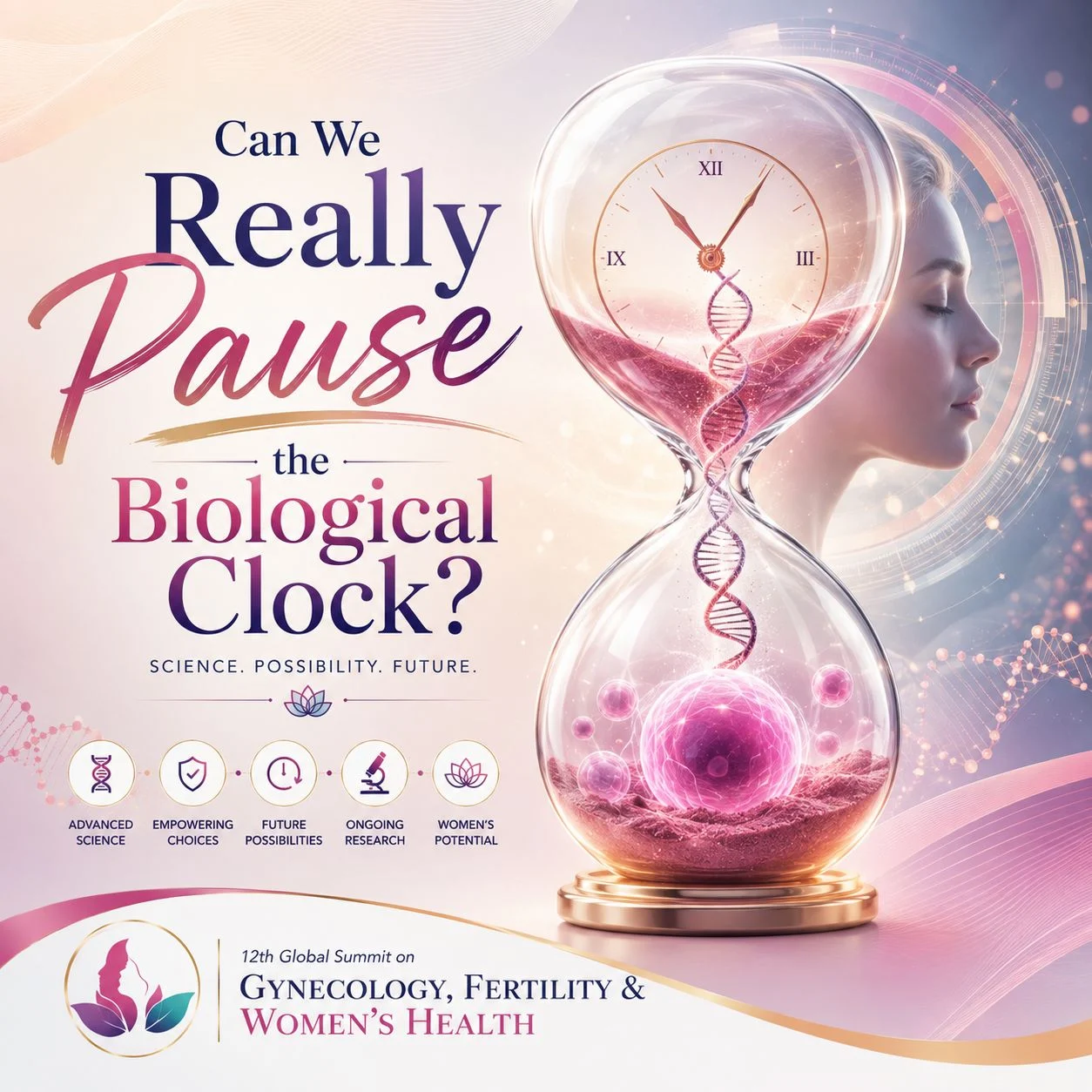
”Can We Really Pause the Biological Clock?
For years, women have been told that fertility comes with a ticking biological clock.
But modern reproductive medicine is challenging one important question:
Can we pause the clock – or only preserve what we have today?
The answer is more nuanced than a simple yes or no.
- Ovarian aging continues
Egg quantity and quality naturally change with age. Fertility preservation does not stop the biological aging process.
- Egg freezing can preserve potential
Vitrification allows unfertilized eggs to be stored for future use. The important point? We preserve the eggs-not fertility itself.
- Embryo freezing offers another pathway
For some individuals, embryos created through IVF can be cryopreserved for future treatment.
- Ovarian rejuvenation is being investigated
PRP, stem-cell approaches, and other regenerative strategies are being studied-but many remain experimental and require stronger evidence.
- Ovarian reserve testing provides information – not a crystal ball
Markers such as AMH and antral follicle count can help assess ovarian reserve, but they cannot precisely predict an individual’s natural fertility or guarantee future pregnancy.
So, Can We Really Pause Time?
Not yet.
But reproductive medicine can increasingly help us preserve reproductive options, understand ovarian health earlier, and make more informed decisions about family planning.
The future may not be about stopping the biological clock.
It may be about understanding it earlier – and using science wisely before time becomes the limiting factor.
At the 12th Global Summit on Gynecology, Fertility and Women’s Health (GFWΗ 2026), experts will explore advances in fertility preservation, IVF, reproductive endocrinology, cryopreservation, precision fertility, and emerging reproductive technologies.
- November 23 – 24, 2026
- Bangkok, Thailand
We may not be able to stop the biological clock – but we may be learning how to plan better around it.”
Other articles featuring GFWH 2026 on Fertility News.
-
Oct 22, 2026, 17:36Filipa Rafael: A Woman Should Not Have to Be Trying for a Baby for Her Ovarian Insufficiency to Matter
-
Oct 22, 2026, 17:30Michele Boiani: New Insight on Zona Pellucida Proteins
-
Oct 22, 2026, 17:01Sean Lauber: New Review Assesses PGT-A Effectiveness and Safety
-
Oct 22, 2026, 16:56Eric Lameignere: Optimizing Sperm Handling Conditions in the IVF Laboratory
-
Oct 22, 2026, 16:49Rajeev Agarwal: Most Failed IVF Transfers Are About the Embryo, Not the Uterus
-
Oct 22, 2026, 16:44Devyanshi Dixit: Calling for Delegates for GFWH 2026
-
Oct 22, 2026, 16:35Kate Ryder: Headed to ASRM 2026 and Looking Forward to Spending Time with Clinic Partners
-
Oct 22, 2026, 16:27Can PCOS/PMOS Increase the Risk of Premature Death? – PCOS Millennials
-
Oct 22, 2026, 16:18Margaret Cali: Before IVF Begins, a Lot of Preparation Happens…