
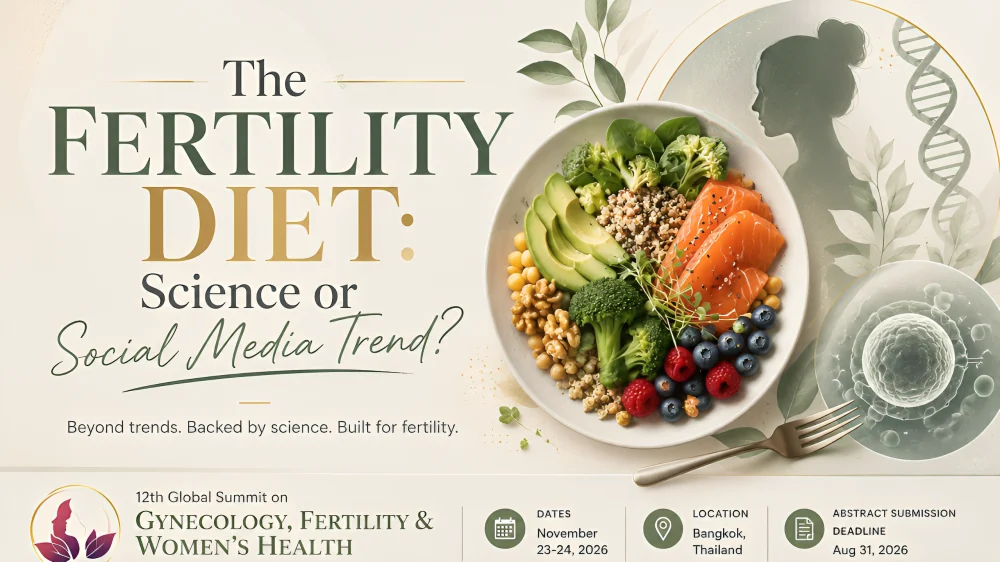
Devyanshi Dixit: The Fertility Diet – Science or Social Media Trend?
Devyanshi Dixit, Program Manager at CLS Event and Publication and Conference Manager at the 12th Global Summit on Gynecology, shared on LinkedIn։
“The Fertility Diet: Science or Social Media Trend?
Can your plate really influence your fertility – or has social media turned nutrition into another fertility myth?
Less hype. More evidence. Better fertility care.
Read the full blog and join the conversation at GFWH 2026.
Can what we eat really influence our chances of having a baby?
From ‘fertility-boosting’ smoothies and antioxidant powders to seed cycling, Mediterranean diets, supplements, and viral fertility meal plans – nutrition has become one of the biggest conversations in reproductive health.
But where does science end and social media begin?
The answer is more nuanced than a simple ‘fertility superfood.’
Current evidence suggests that overall health, nutritional adequacy, metabolic health, and dietary patterns may matter for reproductive outcomes. However, there is no single diet proven to dramatically increase fertility for everyone. The American Society for Reproductive Medicine notes that evidence linking specific diets to improved natural fertility remains limited, while some observational studies have associated healthier dietary patterns with better outcomes in certain populations.
So perhaps the real fertility diet isn’t a restrictive menu.
It is a sustainable approach to reproductive health.
From ՛Fertility Foods՛ to Fertility Health
The modern conversation is shifting from individual foods to the overall nutritional pattern.
Instead of asking:
՛Which food will make me more fertile?՛
A better clinical question may be:
՛Is the patient’s overall nutritional and metabolic environment supporting reproductive health?՛
This distinction matters.
Fertility is influenced by multiple factors, including:
- Age
- Ovulation
- Ovarian reserve
- Metabolic health
- Body weight and nutritional status
- Endometriosis and other gynecological conditions
- Sperm health
- Genetics
- Lifestyle
- Underlying medical conditions
Diet is one piece of a much larger reproductive puzzle.
Why is the Mediterranean Diet Getting So Much Attention?
Among the dietary patterns studied in reproductive medicine, the Mediterranean-style diet has attracted considerable interest.
It typically emphasizes:
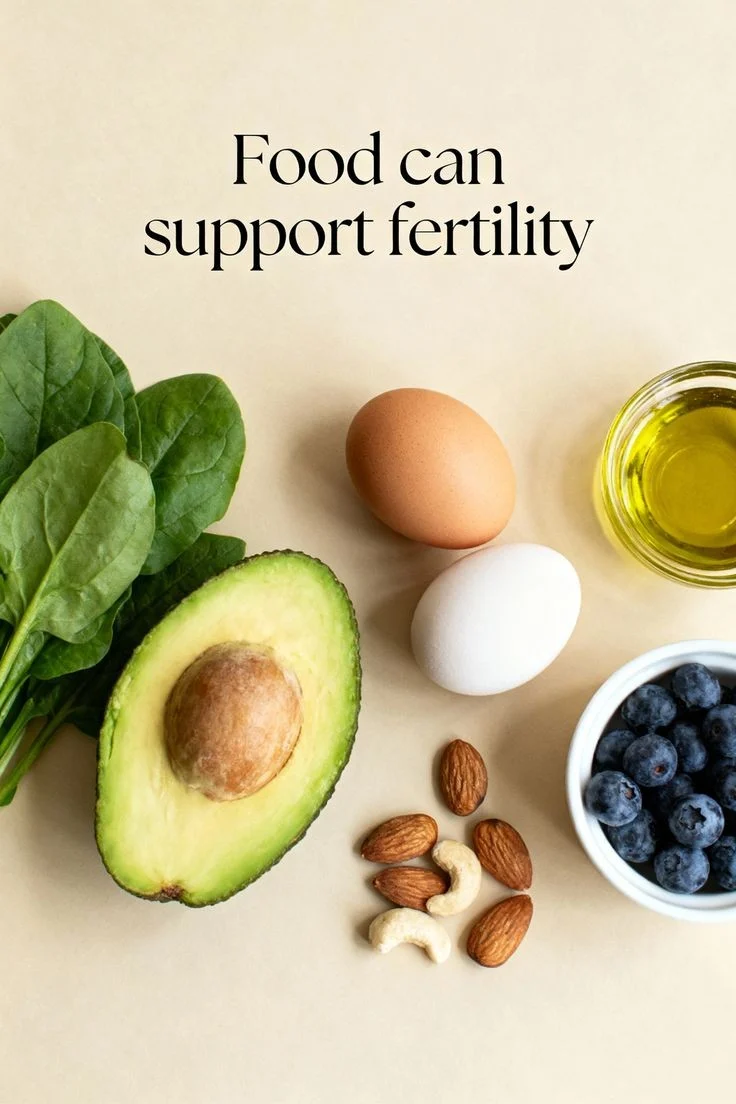
- Vegetables
- Fruits
- Whole grains
- Legumes
- Nuts and seeds
- Olive oil
- Fish and seafood
- Moderate poultry and dairy
Several observational studies have reported associations between Mediterranean-style eating patterns and improved outcomes in some IVF populations.
But there is an important caveat.
Association does not prove causation.
ASRM notes that studies of Mediterranean-style diets and assisted reproductive outcomes have produced inconsistent results, and randomized controlled trials are still needed.
That means clinicians should avoid turning a promising dietary pattern into a guaranteed fertility prescription.
The Nutrients That Actually Matter
Rather than chasing ‘superfoods,’ reproductive nutrition should focus on adequacy and individual needs.
Folate and Folic Acid
One of the clearest evidence-based recommendations concerns folic acid.
CDC recommends that women capable of becoming pregnant consume 400 micrograms of folic acid daily, including before pregnancy, to help reduce the risk of neural tube defects.
That is very different from the social-media message:
‘Take this supplement to get pregnant faster.’
Folic acid is important for a healthy pregnancy – not a guaranteed fertility booster.
- Omega-3 Fatty Acids
Fish and other sources of omega-3 fatty acids have attracted attention in reproductive research because of their roles in inflammation and overall health.
But again, evidence does not support presenting omega-3 supplements as a universal fertility treatment.
- Whole Grains and Fiber
Replacing highly refined carbohydrates with more nutrient-dense carbohydrate sources can support overall metabolic health.
This may be particularly relevant for women with metabolic dysfunction or conditions such as PCOS, where nutrition and insulin sensitivity can intersect with reproductive health.
- Plant-Based Proteins
Beans, lentils, nuts, seeds, and other plant protein sources can contribute to a nutrient-rich dietary pattern.
The goal isn’t necessarily to eliminate animal protein.
It is to create dietary balance and nutritional diversity.
The PCOS Connection
Fertility nutrition becomes particularly interesting in polycystic ovary syndrome (PCOS).
For some women with PCOS, insulin resistance, excess weight, and metabolic dysfunction can influence ovulatory function.
Here, nutrition may become part of a broader treatment strategy that can include:
- Physical activity
- Dietary changes
- Weight management when appropriate
- Medical treatment
- Ovulation induction
- Fertility treatment when indicated
The key is personalization.
There is no universal ‘PCOS diet.’
A sustainable nutritional approach should fit the individual’s metabolic health, preferences, culture, lifestyle, and reproductive goals.
The Social Media Problem
Instagram and TikTok have created an entirely new fertility marketplace.
One week it’s:
- Seed cycling
The next:
- Fertility smoothies
Then:
- Antioxidant supplements
And suddenly:
- Gluten is blamed for infertility
- Dairy is declared harmful
- Carbohydrates are eliminated
- Detoxes are promoted as fertility treatments
The problem?
Biological complexity cannot be reduced to a viral recipe.
Some nutritional practices may be harmless for certain individuals. Others can lead to unnecessary restriction, nutrient deficiencies, anxiety, or delayed medical evaluation.
՛Fertility Supplements՛: Where Should We Be Careful?
The fertility supplement industry is expanding rapidly.
Products may contain combinations of:
- Antioxidants
- Vitamins
- Minerals
- Coenzyme Q10
- Myo-inositol
- Herbal ingredients
- Omega-3 fatty acids
Some have biological plausibility or emerging evidence for specific reproductive conditions.
But ‘promising’ does not mean ՛proven.՛
Supplement quality, dosage, interactions, pregnancy safety, and individual medical circumstances also matter.
Patients should discuss supplements with their healthcare professional – particularly when undergoing fertility treatment or taking medications.
What About Men?
The fertility diet conversation is often directed almost entirely at women.
But approximately half of infertility cases involve a male factor, either alone or together with a female factor.
Nutrition and lifestyle therefore belong in the conversation for both partners.
A balanced dietary pattern, healthy weight, physical activity, avoidance of smoking and recreational drugs, and appropriate management of medical conditions can all be relevant to reproductive health.
Fertility is a couple’s conversation – not just a woman’s responsibility.
5 Hot Topics in Fertility Nutrition
The next generation of reproductive nutrition research is moving toward:
- Precision Nutrition
Can nutritional recommendations be personalized according to metabolic, reproductive, and genetic characteristics? - PCOS and Metabolic Fertility
How can nutrition and metabolic interventions improve ovulatory function and reproductive outcomes? - Nutrition During IVF
Can dietary patterns influence ovarian response, embryo development, implantation, or live birth? - The Gut–Reproductive Axis
Researchers are exploring relationships between the gut microbiome, metabolism, inflammation, and reproductive health. - AI-Powered Nutrition
Could AI eventually combine dietary data, metabolic markers, reproductive history, and treatment outcomes to create individualized nutritional strategies?
These areas are promising – but many remain active research questions.
The Bigger Shift
Fertility nutrition is moving from:
- ‘Eat this one food’ – Overall dietary patterns
- Viral advice – Evidence-based counseling
- Supplement dependence – Nutritional adequacy
- Female-only focus – Couple-centered fertility care
- Generic diets – Personalized nutrition
This may be the most important evolution of all.
Join the Conversation at GFWH 2026
Nutrition is becoming an increasingly important part of the wider reproductive medicine conversation.
At the 12th Global Summit on Gynecology, Fertility and Women’s Health (GFWH 2026), experts will explore developments across fertility, reproductive medicine, IVF, PCOS, lifestyle medicine, and personalized women’s healthcare.
- Bangkok, Thailand
- November 23–24, 2026
Scientific Focus Areas
- Lifestyle, Nutrition and Fertility Outcomes
- Reproductive Medicine
- IVF and Assisted Reproductive Technologies
- PCOS and Hormonal Disorders
- Infertility Diagnosis and Treatment
- Genetics and Precision Fertility
- AI in Reproductive Medicine
- Fertility Preservation and Cryopreservation
Call for Abstracts and Registration
Are you researching nutrition, metabolic health, PCOS, fertility outcomes, IVF, reproductive endocrinology, lifestyle medicine, or personalized fertility care?
Share your research with an international community of gynecologists, fertility specialists, reproductive endocrinologists, embryologists, researchers, nutrition professionals, and healthcare innovators.
Final Thought
Maybe the future of fertility nutrition isn’t about discovering a ‘magic fertility food.’
Maybe it’s about something much more powerful:
understanding the individual.
Her metabolism. Her reproductive history. Her nutritional status. Her medical conditions. Her lifestyle. Her goals.
Because fertility cannot be optimized by one food, one supplement, or one Instagram trend.
The future belongs to nutrition that is evidence-based, personalized, sustainable – and integrated into the bigger picture of reproductive medicine.
The question isn’t: ‘What should every woman eat to become pregnant?’
It is: ‘How can we use nutrition intelligently to support reproductive health – without promising what science cannot yet prove?’ “
Other articles featuring Devyanshi Dixit on Fertility News.

-
Oct 22, 2026, 17:36Filipa Rafael: A Woman Should Not Have to Be Trying for a Baby for Her Ovarian Insufficiency to Matter
-
Oct 22, 2026, 17:30Michele Boiani: New Insight on Zona Pellucida Proteins
-
Oct 22, 2026, 17:01Sean Lauber: New Review Assesses PGT-A Effectiveness and Safety
-
Oct 22, 2026, 16:56Eric Lameignere: Optimizing Sperm Handling Conditions in the IVF Laboratory
-
Oct 22, 2026, 16:49Rajeev Agarwal: Most Failed IVF Transfers Are About the Embryo, Not the Uterus
-
Oct 22, 2026, 16:44Devyanshi Dixit: Calling for Delegates for GFWH 2026
-
Oct 22, 2026, 16:35Kate Ryder: Headed to ASRM 2026 and Looking Forward to Spending Time with Clinic Partners
-
Oct 22, 2026, 16:27Can PCOS/PMOS Increase the Risk of Premature Death? – PCOS Millennials
-
Oct 22, 2026, 16:18Margaret Cali: Before IVF Begins, a Lot of Preparation Happens…