

Devyanshi Dixit: Male Factor Infertility – Why It Shouldn’t Be Overlooked
Devyanshi Dixit, Conference Manager at the 12th Global Summit on Gynecology, Fertility and Women’s Health, and Program Manager at CLS Event and Publication, shared on LinkedIn:
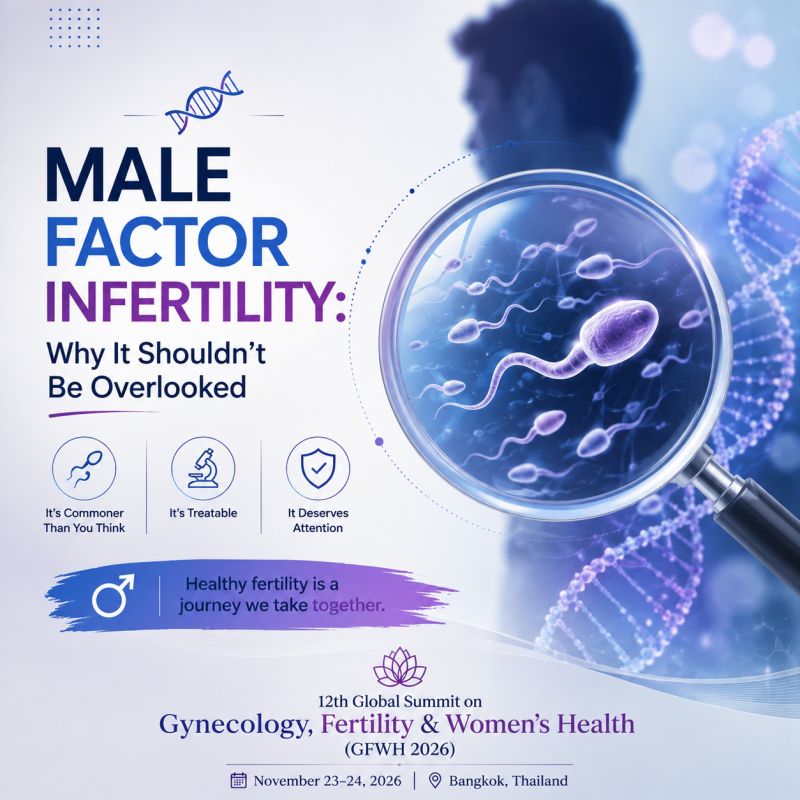
“Male Factor Infertility: Why It Shouldn’t Be Overlooked
When a couple experiences difficulty conceiving, fertility discussions often focus heavily on the woman.
But infertility is not only a female health issue.
Male factors contribute to infertility in a substantial proportion of couples, making parallel evaluation of both partners an essential part of modern fertility care.
What Can Contribute to Male Infertility?
- Sperm Factors
Abnormal sperm count, motility, morphology, or function can affect conception. - Hormonal and Medical Conditions
Endocrine disorders, infections, varicocele, and other health conditions may influence reproductive function. - Genetic Factors
Certain chromosomal or genetic abnormalities can contribute to impaired sperm production. - Lifestyle and Environmental Factors
Smoking, obesity, heat exposure, some medications, occupational exposures, and other factors may affect sperm health.
What’s Changing in Male Fertility Care?
- Advanced semen and sperm-function testing
- Genetic and molecular evaluation
- AI-assisted sperm and embryo assessment
- Improved sperm selection techniques
- Fertility preservation and sperm cryopreservation
- More personalized treatment strategies
Why Does This Matter?
Fertility is a shared health journey.
Evaluating both partners early can help identify contributing factors, avoid unnecessary delays, and support more individualized treatment planning.
The future of reproductive medicine depends on treating male and female fertility as equally important components of comprehensive fertility care.
These advances in male infertility, reproductive medicine, embryology, IVF, fertility preservation, and precision fertility will be among the areas explored at the 12th Global Summit on Gynecology, Fertility and Women’s Health (GFWH 2026).
- November 23–24, 2026
- Bangkok, Thailand
Download the Brochure.
When we evaluate both partners, we don’t just improve fertility care – we improve the understanding of fertility itself.”
Other articles featuring Devyanshi Dixit on Fertility News.
-
Oct 22, 2026, 17:36Filipa Rafael: A Woman Should Not Have to Be Trying for a Baby for Her Ovarian Insufficiency to Matter
-
Oct 22, 2026, 17:30Michele Boiani: New Insight on Zona Pellucida Proteins
-
Oct 22, 2026, 17:01Sean Lauber: New Review Assesses PGT-A Effectiveness and Safety
-
Oct 22, 2026, 16:56Eric Lameignere: Optimizing Sperm Handling Conditions in the IVF Laboratory
-
Oct 22, 2026, 16:49Rajeev Agarwal: Most Failed IVF Transfers Are About the Embryo, Not the Uterus
-
Oct 22, 2026, 16:44Devyanshi Dixit: Calling for Delegates for GFWH 2026
-
Oct 22, 2026, 16:35Kate Ryder: Headed to ASRM 2026 and Looking Forward to Spending Time with Clinic Partners
-
Oct 22, 2026, 16:27Can PCOS/PMOS Increase the Risk of Premature Death? – PCOS Millennials
-
Oct 22, 2026, 16:18Margaret Cali: Before IVF Begins, a Lot of Preparation Happens…