
Rahul Manoj: DNA Packaging in Sperm
Rahul Manoj, Senior Embryologist at Best Life Fertility Center, shared a post on LinkedIn:
“Day 31 – DNA Packaging in Sperm: The Art of Genetic Condensation
One of the most remarkable transformations in spermatogenesis is how the sperm’s DNA becomes packed into an incredibly compact form – essential for protecting the paternal genome and ensuring fertilization success.
What Happens During DNA Packaging
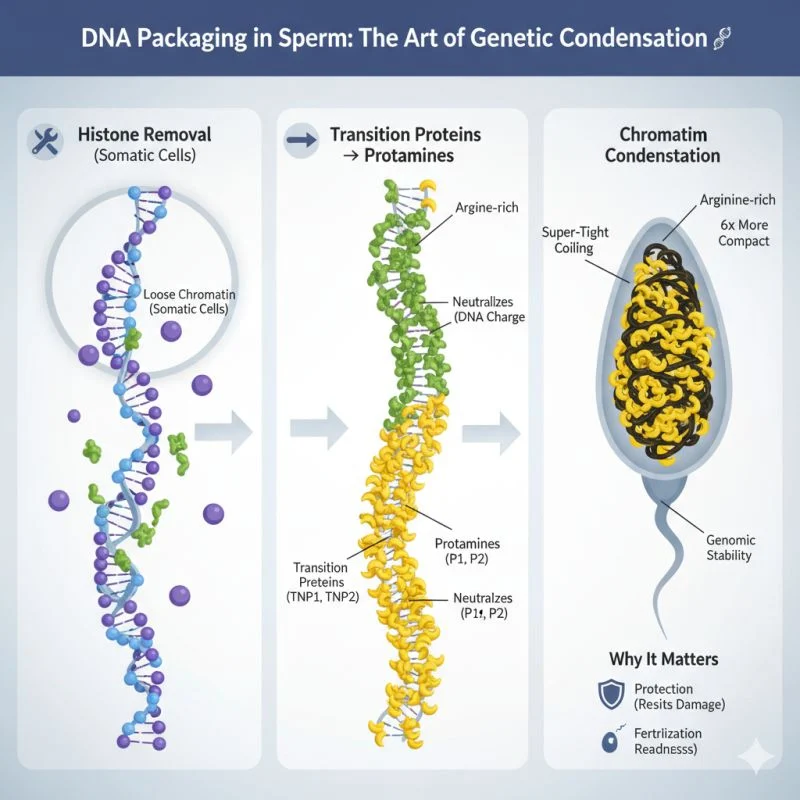
During spermiogenesis, the round spermatid’s loose chromatin (similar to that in somatic cells) undergoes a dramatic reorganization:
1. Histone Removal:
In normal cells, DNA is wrapped around histones.
In sperm, these histones are gradually replaced by transition proteins (TNP1 and TNP2).
2. Transition Proteins → Protamines:
Transition proteins are then replaced by protamines (P1 and P2), which are small, arginine-rich proteins.
Protamines neutralize the negative charge of DNA and allow super-tight coiling of the genetic material.
3. Chromatin Condensation:
The resulting DNA-protamine complex is about six times more compact than somatic chromatin.
This extreme condensation ensures genomic stability during sperm transport and protects DNA from damage and mutagens.
Why It Matters
Protection: Highly compacted DNA resists oxidative and enzymatic damage.
Fertilization readiness: Proper DNA packaging ensures accurate delivery of the paternal genome to the oocyte.
Infertility Link
Incomplete protamination leads to loosely packed DNA, increased DNA fragmentation, and poor embryo development.
These issues can be assessed through chromatin structure assays (SCSA) or protamine deficiency tests such as CMA3 staining.
Clinical Value
An abnormal protamine ratio (P1:P2 imbalance) is associated with:
Poor sperm motility and morphology
Lower fertilization and pregnancy rates in assisted reproductive technologies (ART)
Improving antioxidant status and optimizing the testicular environment can enhance proper DNA packaging and overall sperm quality.”
Stay updated on all scientific advances in the field of fertility with Fertility News.
-
Oct 12, 2026, 16:55Karthik Raj: True Biological Embryo Mosaicism vs. Technical Detection
-
Oct 12, 2026, 16:50Nagi Rostom: Sharing Insights on Reproductive Health and Fertility at a Women’s Health Open Morning
-
Oct 12, 2026, 16:44Katy Encalade: Why Early Education Matters in Egg Donation and Surrogacy
-
Oct 12, 2026, 16:31It’s Time to Talk about Fertility-Aware Workplaces – ESHRE
-
Oct 12, 2026, 16:23Anu Chawla: WHO’s Global Roadmap for Hypertensive Disorders of Pregnancy Is a Significant Step Forward
-
Oct 12, 2026, 16:11Devyanshi Dixit: Behind Every Breakthrough Is a Reason to Keep Going
-
Oct 12, 2026, 16:01Suganya Venkat: The Kindest Thing to Say After a Failed IVF Cycle Is Not “Try Again”
-
Oct 12, 2026, 15:58Lucy Froese: When You Lose a Pregnancy, You Don’t Just Lose Your Baby…
-
Oct 12, 2026, 15:56Beata Blazkova: What Actually Makes an Embryo Keep Going?