

Sarah Stock: Women’s Health Innovation Is Advancing Faster Than Healthcare Systems Can Adapt
Sarah Stock, Professor of Maternal and Fetal Health at The University of Edinburgh, shared a post on LinkedIn:
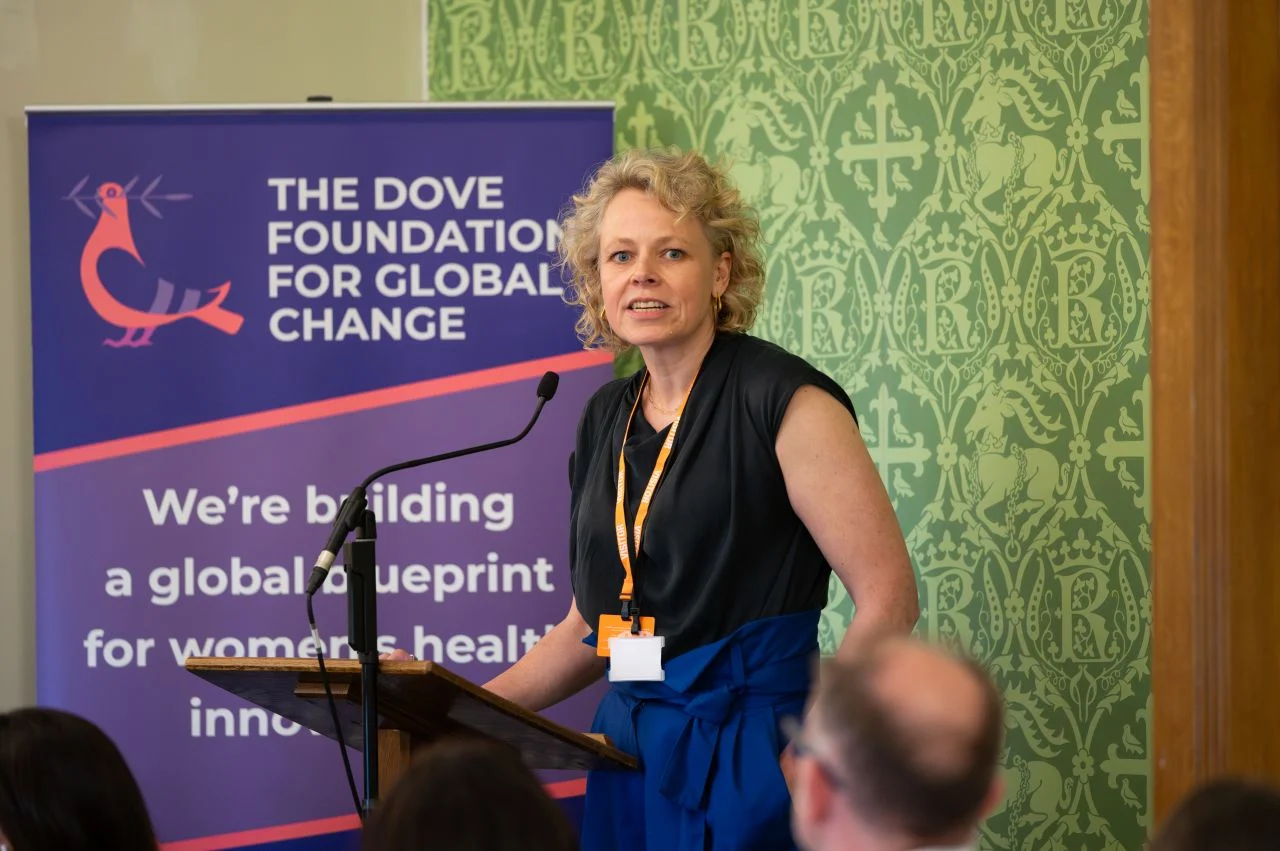
“Last week at the Houses of Parliament, I joined the Dove Foundation for Global Change and an illustrious groups of leaders to help build a blueprint for women’s health innovation.
What struck me most was a paradox.
Every day, hundreds of thousands of women receive life-changing diagnoses with no optimised treatments. At the same time, millions live with debilitating symptoms and no diagnosis at all – often believing it’s just ‘part of being a woman.’
As a doctor, I’ve seen this professionally and, like many women, felt it personally.
But the conversation is shifting. We’re no longer just describing the crisis. We’re starting to build solutions.
At Wellcome Leap, we use a DARPA-inspired model to deliver health breakthroughs in years, not decades – investing over $250M across women’s health, from stillbirth to cardiovascular disease and Alzheimer’s.
I shared examples from our In Utero programme, focused on preventing stillbirth – what the World Health Organization has called a ‘neglected tragedy.’
Neglected in data. Neglected in policy. Neglected in research.
The result: a toolkit for antenatal care that has barely changed in decades – a blood pressure cuff, a tape measure, a urine dipstick.
That is starting to change. In just three years, global teams in the programme have developed:
- blood biomarkers predicting placental complications
- wearable fetal monitoring technologies now entering regulated studies
- AI-enabled software to predict fetal oxygen levels, even in low-resource settings
- a risk prediction platform that can detect signals between care visits
The science is moving. Fast. Other breakthroughs are on the horizon.
But here is the paradox:
These new technologies are continuous, preventative, AI-enabled, and designed for fragmented care systems – yet regulatory pathways remain siloed, sequential, and built for static interventions.
We’re trying to solve 21st-century problems with 20th-century infrastructure.
COVID-19 showed a better way is possible: rolling reviews, parallel collaboration, and inclusion of women – including pregnant women – in clinical trials. Speed doesn’t mean compromising safety. It means removing the whitespace between steps.
Now we need that same urgency for women’s health.
The bottleneck is no longer science.
It’s regulation, access, and implementation.
Women have waited long enough.”
Asma Khalil, Professor of Maternal Fetal Medicine at St. George’s Hospital, shared a post by Sarah Stock, adding:
“Thank you Sarah for highlighting such an important conversation on the future of women’s health innovation. It was a privilege to contribute to the discussions alongside colleagues from across research, clinical care, policy, and industry who share a commitment to improving outcomes for women and babies.
What is particularly encouraging is seeing the pace of innovation in areas such as stillbirth prevention, AI-enabled risk prediction, and personalised antenatal care. The challenge now is ensuring these advances translate into real-world impact through effective implementation, collaboration, and equitable access.
There is enormous opportunity ahead if we continue working together across disciplines to accelerate progress in maternal and women’s health globally.”
Stay updated on all scientific advances in the field of fertility with Fertility News.
-
Sep 13, 2026, 15:11Sachintha Alwis: From Impaired Sperm Motility to Microrobotics
-
Sep 13, 2026, 15:08Laurence Orbuch: Before Endometriosis Surgery, Ask…
-
Sep 13, 2026, 15:05Ademola Ayodele: IUI, IVF or Egg Freezing – Which One Is Right for You?
-
Sep 13, 2026, 14:59Fiona Pathiraja-Møller: Tennis Players No Longer Have to Choose Between Career and Family
-
Sep 13, 2026, 14:571-Day Virtual Experience for People Impacted by PMOS – PCOS Awareness Association
-
Sep 13, 2026, 14:53Ozor Victor: Behind Every Embryo Is a Story of Science, Precision, and Hope
-
Sep 13, 2026, 14:50Diana Kayal: What They Don’t Tell You About IVF
-
Sep 13, 2026, 14:44Vikram Sinai Talaulikar: A Heartfelt Thank You to All Who Donated and Supported “Menopause and Cancer”
-
Sep 13, 2026, 14:41Nicole McPherson: Changing IVF Practices Is Hard – Integration Needs to Be Easy