

5 Articles Suggested by Christopher Robinson
Christopher Robinson, Associate Professor of Maternal-Fetal Medicine at the University of South Carolina and Executive Chair of the Foundation for the Society for Maternal-Fetal Medicine, shared some top articles on LinkedIn:
1. AJOG Expert Review in Cesarean
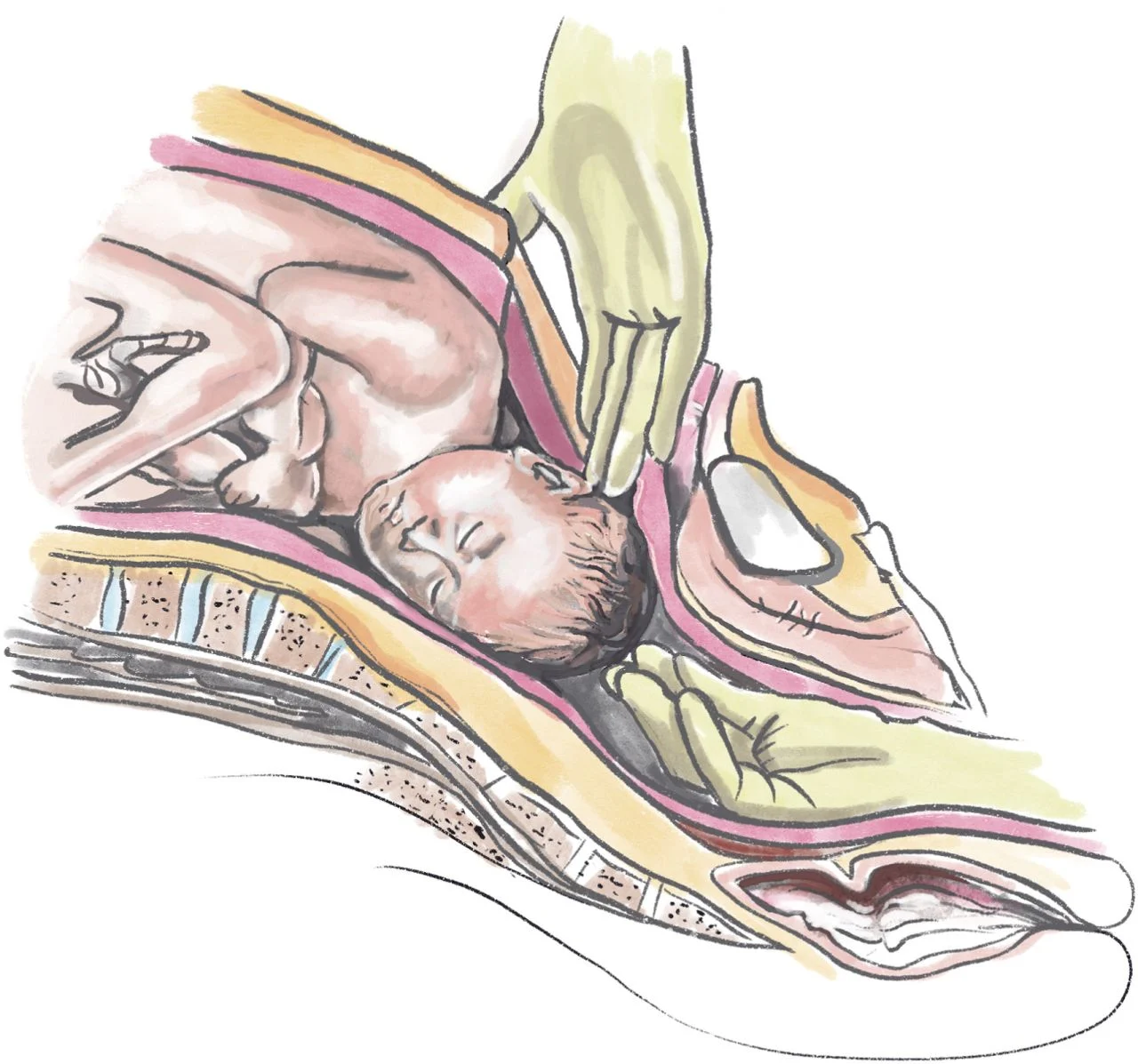
“AJOG Expert Review in Cesarean: The impacted fetal head at cesarean delivery, incidence, complications and management options, including a new device – Diagram illustrating the ‘push’ technique, which involves an assistant placing a hand into the vagina and applying pressure underneath the fetal head to flex and elevate the head out of the pelvis.
The technique often described is to use a cupped hand to reduce point pressure on the skull. However, if the head is deeply impacted, the assistant is unlikely to be unable to pass fingers around the head from below to achieve pressure with more than their fingertips.”
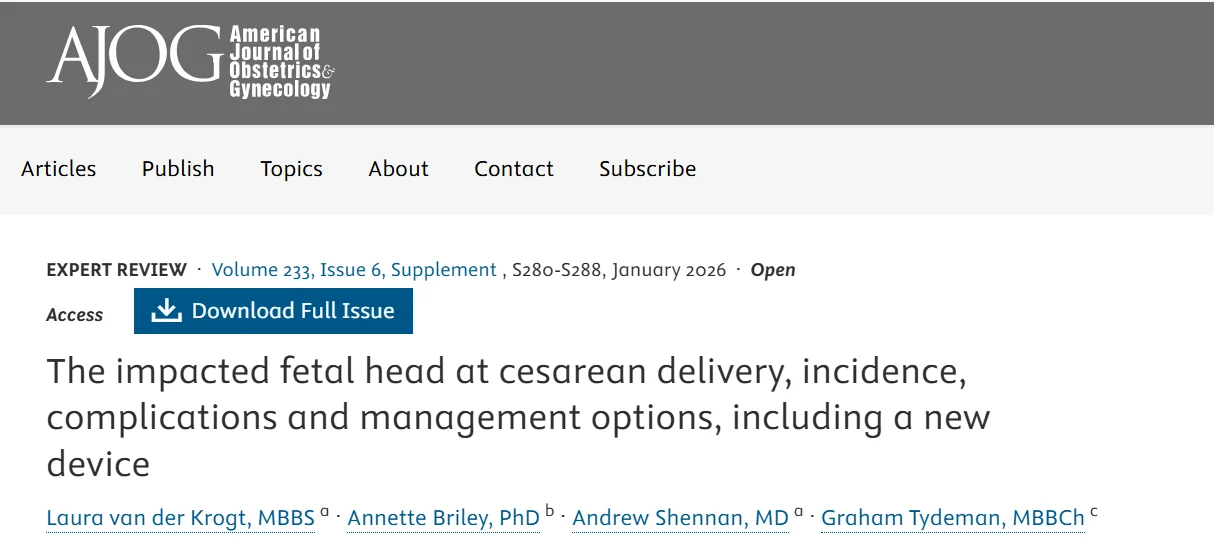
Title: The impacted fetal head at cesarean delivery, incidence, complications and management options, including a new device
Authors: Laura van der Krogt, Annette Briley, Andrew Shennan, Graham Tydeman.
You can read the Full Article in the American Journal of Obstetrics and Gynecology.
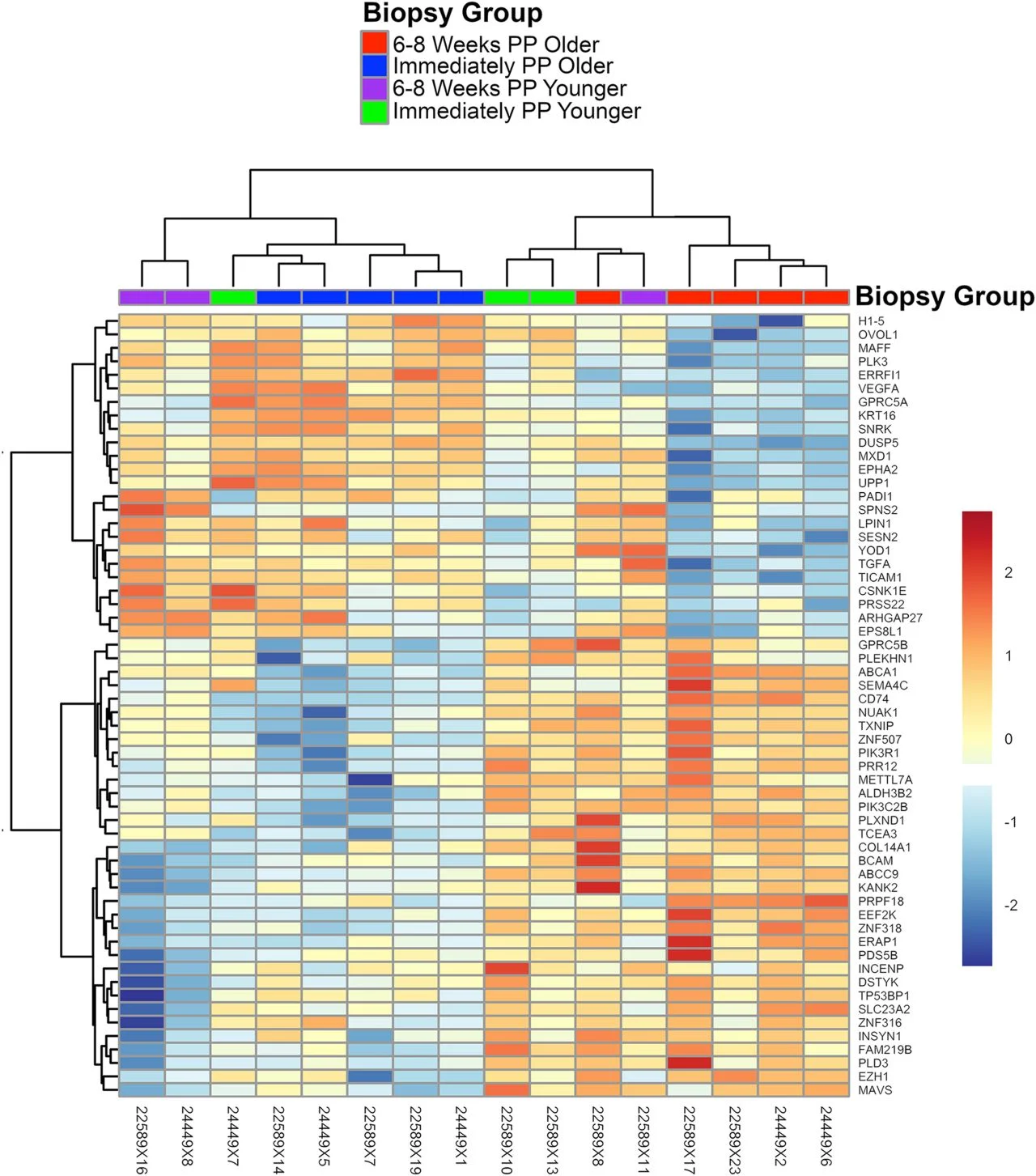
2. Heatmap of differentially recovery-responsive genes in age-by-postpartum recovery interaction
“Transcriptomic evidence of remodeling in postpartum levator ani muscle associated with maternal age and recovery time after first vaginal delivery – Heatmap of differentially recovery-responsive genes in age-by-postpartum recovery interaction.
Hierarchical clustering of log2-transformed RNA-seq expression values for 58 protein-coding genes exhibiting a significant statistical interaction between maternal age (young vs older) and postpartum recovery interval (immediate vs 6–8 weeks). Samples segregate into 4 clinical groups defined by age and recovery time, illustrating nonadditive (synergistic or antagonistic) expression trajectories across cohorts. ”
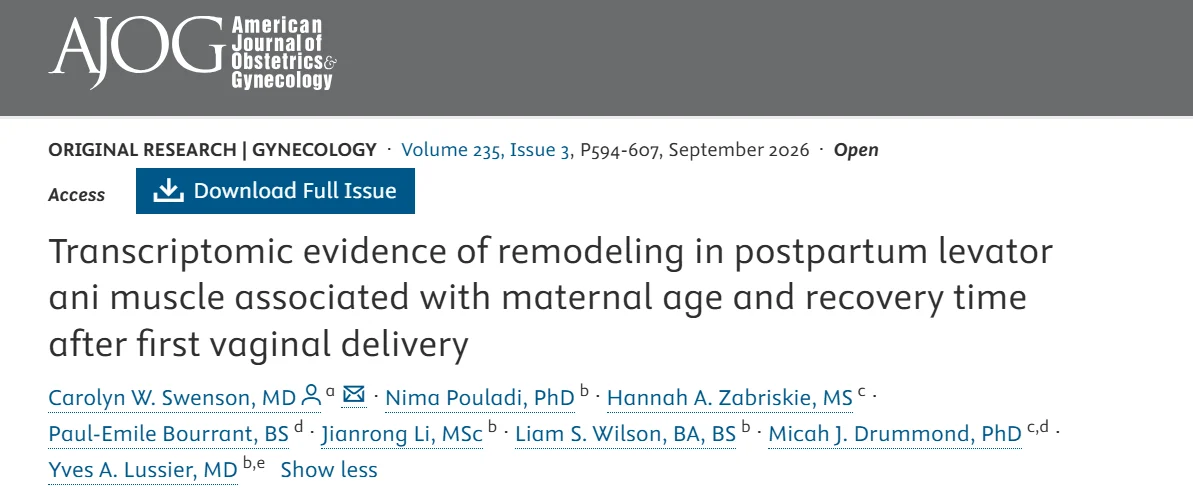
Title: Transcriptomic evidence of remodeling in postpartum levator ani muscle associated with maternal age and recovery time after first vaginal delivery.
Authors: Carolyn W. Swenson, Nima Pouladi, Hannah A. Zabriskie, Paul-Emile Bourrant, Jianrong Li, Liam S. Wilson, Micah J. Drummond, Yves A. Lussier.
You can read the Full Article in the American Journal of Obstetrics and Gynecology.
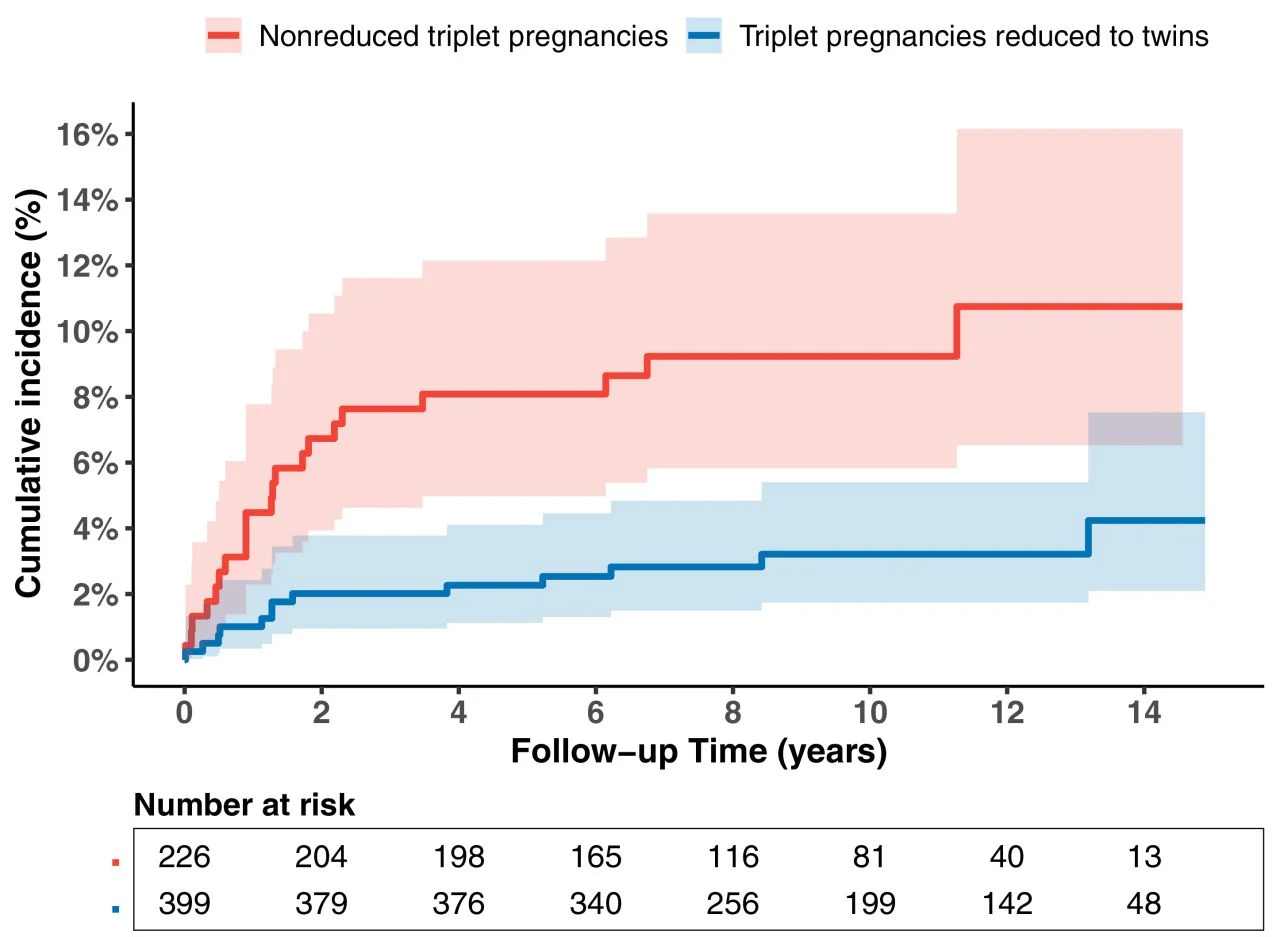
3. Cumulative risk of neurodevelopmental disorders in reduced versus non-reduced triplets
“Neurodevelopmental disorders following fetal reduction of triplet pregnancies: a nationwide cohort study – Cumulative risk of neurodevelopmental disorders in reduced versus non-reduced triplets․”
Title: Neurodevelopmental disorders following fetal reduction of triplet pregnancies: a nationwide cohort study.
Authors: Mads L. Larsen, Steffen E. Kristensen, Maria K. Rasmussen, Christina E. Hoei-Hansen, Olav B. Petersen.
You can read the Full Article in the American Journal of Obstetrics and Gynecology.
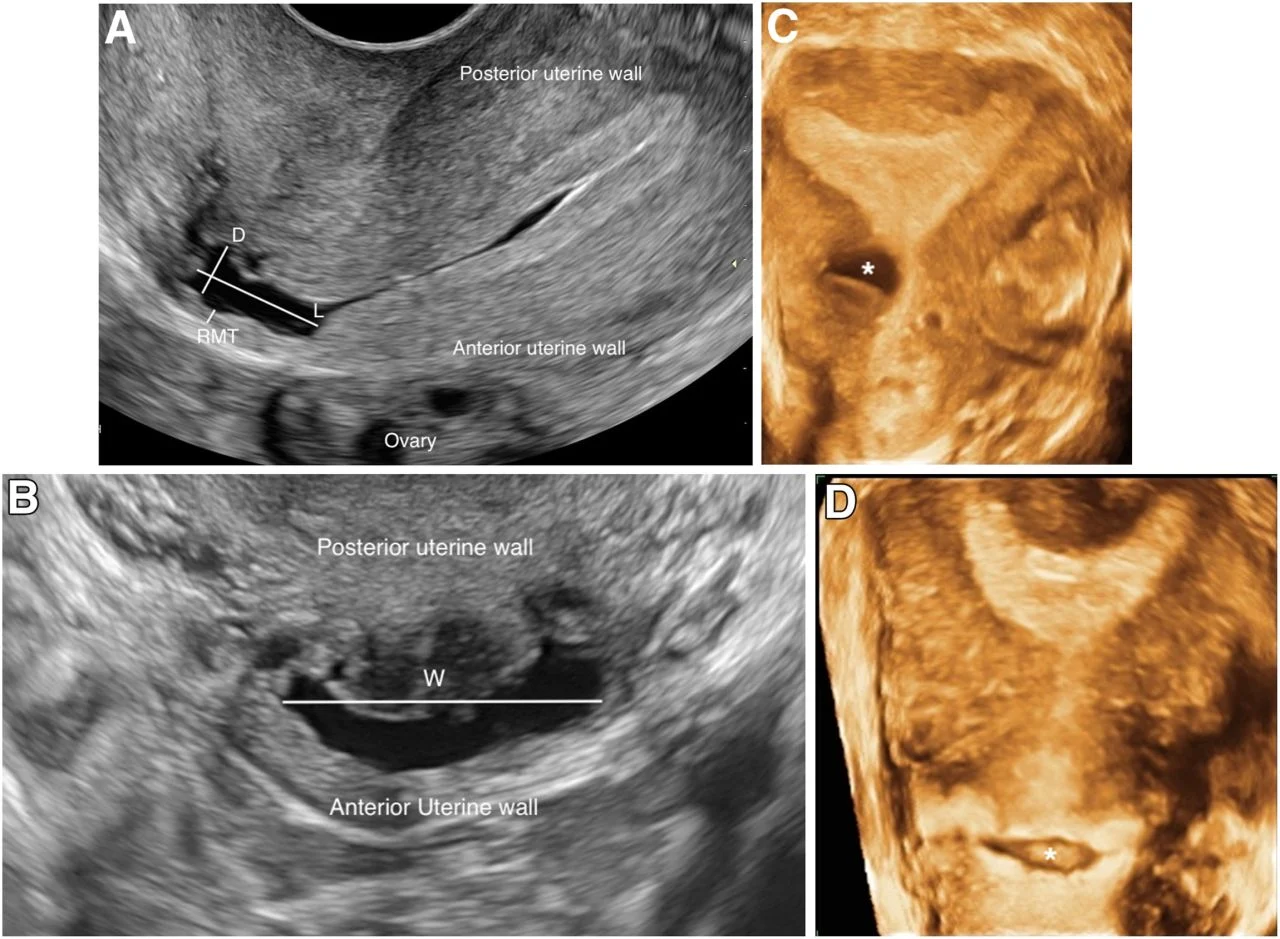
4. Transvaginal ultrasound images of cesarean scar defects
“Reducing the long-term impact of cesarean scar defects: a focus on prevention – Transvaginal ultrasound images of cesarean scar defects.
- 2D longitudinal view in the sagittal plane, of a retroflexed uterus with a large cesarean scar defect, showing how to measure the length and depth of the cesarean scar defect;
- 2D transverse view of the same patient, showing how to measure the width of the cesarean scar defect, at its largest point;
- 3D sagittal view of a large cesarean scar defect (∗);
- 3D coronal view of a large cesarean scar defect (∗).
It is not possible to measure residual myometrial thickness in the 3D images, but they illustrate the distortion of the uterine anatomy.”
Title: Reducing the long-term impact of cesarean scar defects: a focus on prevention.
Authors: Sarah P. Walker, Helena C. Bartels, Davor Jurkovic, Eric Jauniaux.
You can read the Full Article in the American Journal of Obstetrics and Gynecology.
5. What does uterine artery Doppler reflect in late pregnancy?
“What does uterine artery Doppler reflect in late pregnancy? Insights from angiogenic, hemodynamic, and vascular markers in preeclampsia․”
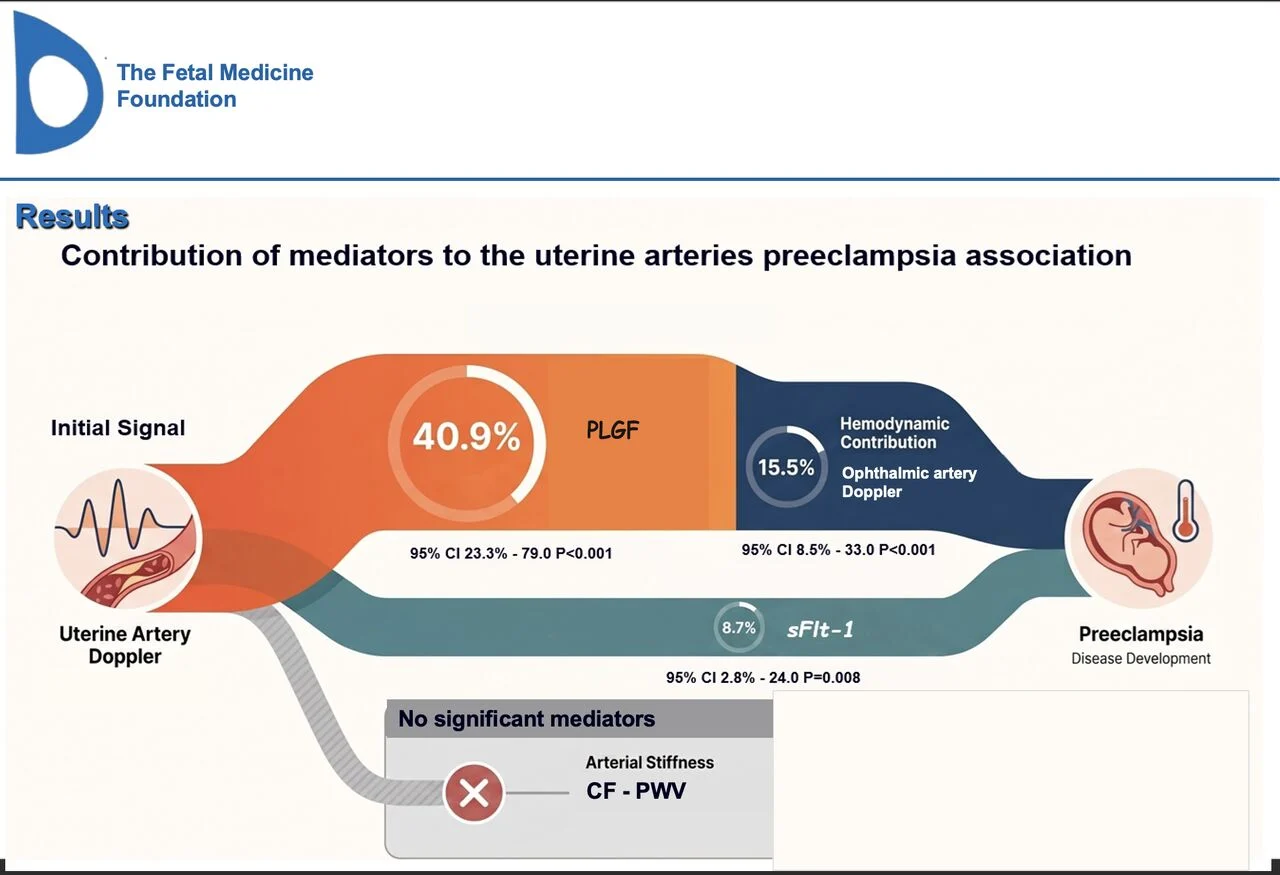
Title: What does uterine artery Doppler reflect in late pregnancy? Insights from angiogenic, hemodynamic, and vascular markers in preeclampsia.
Authors: Christos Chatzakis, Tanvi Mansukhani, Disha Bhojwani, Megan Harris-Wood, Marietta Charakida, Kypros H. Nicolaides․
You can read the Full Article in the American Journal of Obstetrics and Gynecology.
You can also read the previous “5 Articles Suggested by Christopher Robinson” on Fertility News.
-
Oct 16, 2026, 19:56Dina Ibrahem: Poor ICM vs. Poor TE
-
Oct 16, 2026, 19:47Sean Lauber: NIPT and Amniocentesis after PGT-A Reveal Few Abnormalities
-
Oct 16, 2026, 19:42Devyanshi Dixit: C-Section vs. Vaginal Birth – 2 Birth Paths, 2 Very Different Recoveries
-
Oct 16, 2026, 19:32Pawel Kordowitzki: Maternal Vitamin D Homeostasis, Pregnancy Outcomes and Offspring Health
-
Oct 16, 2026, 19:13Shizuko Takahashi: Our Study on Women’s Experiences of Assisted Reproductive Care in China Has Been Accepted by RBMO
-
Oct 16, 2026, 19:09ESHRE Announces ECRES-GESEA Reproductive Surgery Training and Certification in Slovenia
-
Oct 16, 2026, 18:20Kabita KB: What Happens if PLCZ1 Is Defective?
-
Oct 16, 2026, 18:12Partha Sarathi Das: From Reproductive Lifespan to Reproductive Healthspan
-
Oct 16, 2026, 18:05Joyce Harper: It Was a Pleasure to Give 2 Talks Celebrating World Menopause Day