
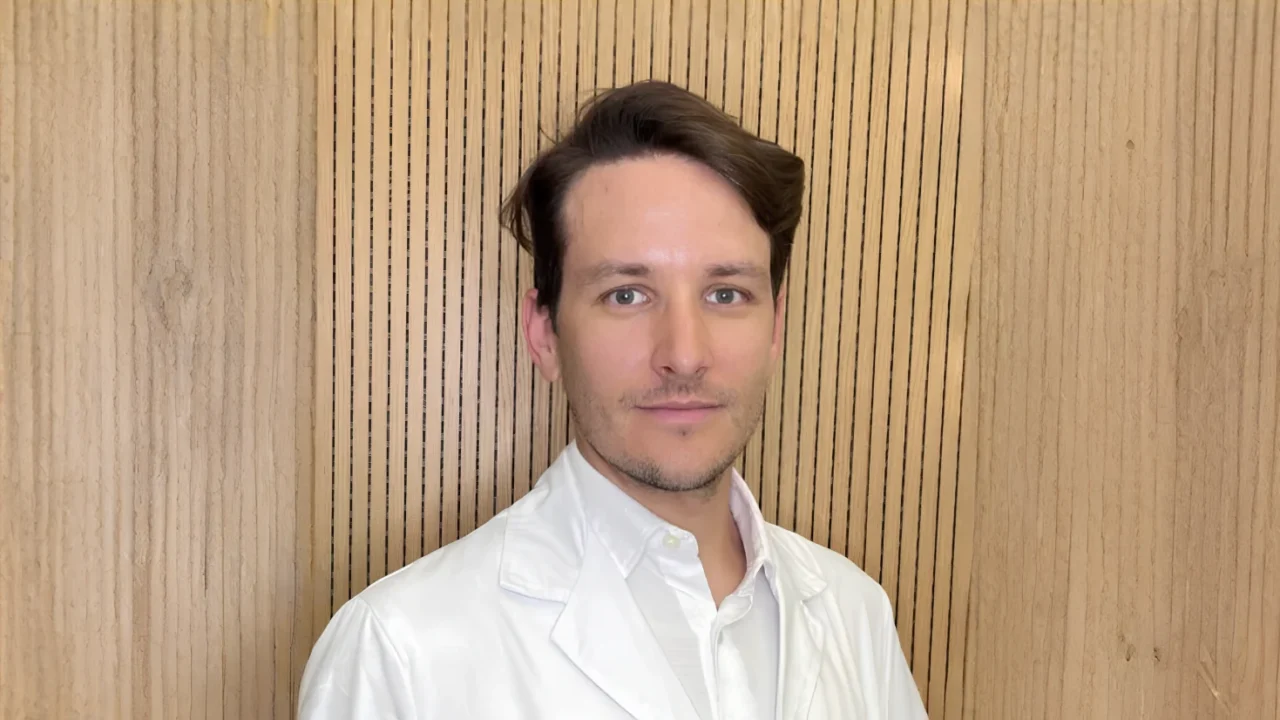
Yannick Hurni: Perhaps Not All Adenomyosis Is the Same…
Yannick Hurni, Clinical and Research Fellow in Gynecological Surgery and Reproductive Medicine at Dexeus Mujer, shared a post on LinkedIn about a paper he co-authored with colleagues published in Reproductive BioMedicine Online:
“One of the most rewarding aspects of research is when it forces you to ask better questions rather than providing definitive answers.
This study started from an observation that is receiving increasing attention: perhaps not all adenomyosis is the same. Maybe the phenotype that truly matters for endometrial function is adenomyosis involving the inner myometrial layer, the junctional zone, where the myometrium and endometrium interact most closely.
We then looked at another fascinating and highly controversial entity: chronic endometritis.
If I’m honest, my heart would like chronic endometritis to be a real disease. My scientific brain often tells me to remain skeptical.
What our data do show is that women with inner diffuse adenomyosis were about four times more likely to have ≥5 CD138-positive cells per high-power field on endometrial biopsy than women without adenomyosis, even after adjustment for multiple confounders.
But then the difficult questions begin.
- Are these cells simply a marker of chronic endometritis?
- Are they a consequence of the inflammatory and immune alterations driven by adenomyosis itself?
- Could they represent a marker of endometrial dysfunction rather than an infectious process?
- Or are we still oversimplifying a much more complex biology?
The more I read, the more I realize how much we still don’t know. Even CD138 immunostaining, which we often treat as a surrogate for plasma cells, may not be as straightforward as we once believed.
This study doesn’t answer those questions. It wasn’t designed to.
But I hope it adds one more piece to an emerging puzzle: that the interface between the endometrium and the inner myometrium may hold many of the answers to reproductive dysfunction in adenomyosis.
Sometimes the most important contribution of a study is not to close a debate, but to make the next questions more interesting.”
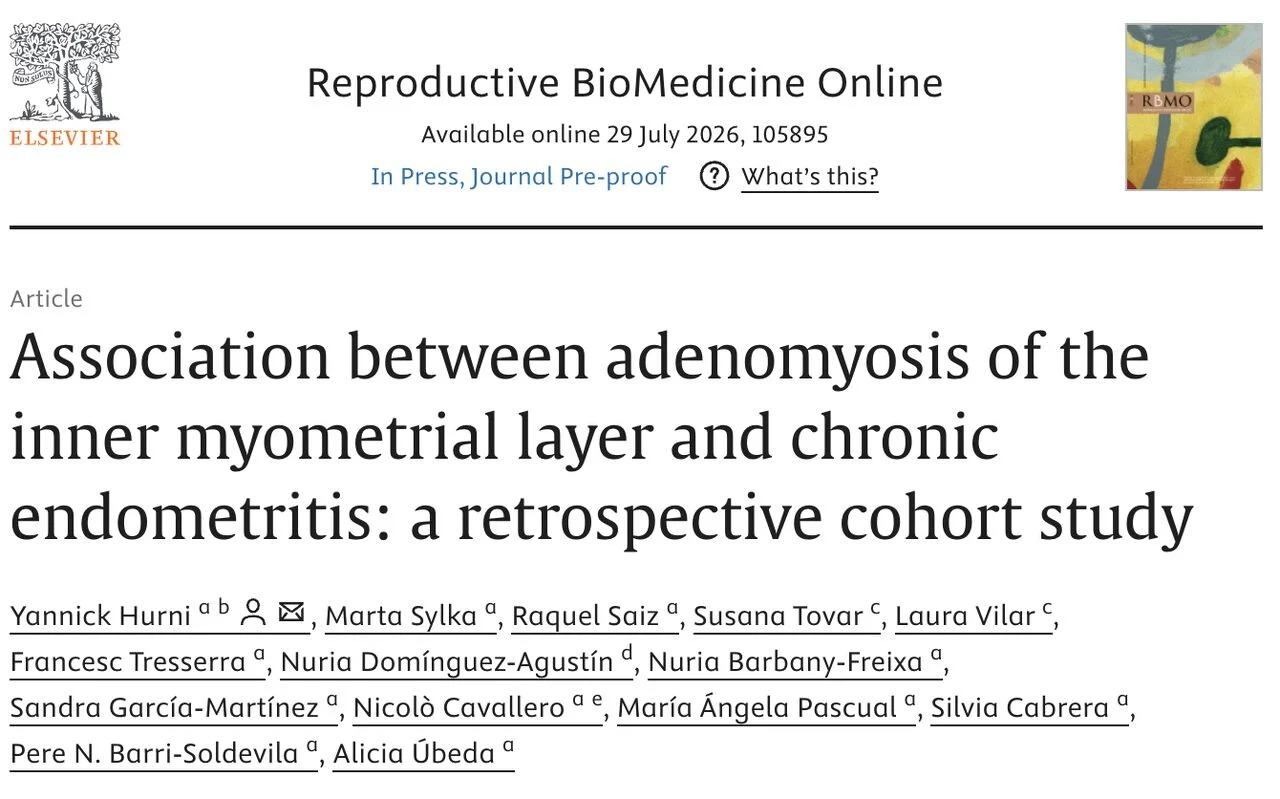
Title: Association between adenomyosis of the inner myometrial layer and chronic endometritis: a retrospective cohort study
Authors: Yannick Hurni, Marta Sylka, Raquel Saiz, Susana Tovar, Laura Vilar, Francesc Tresserra, Nuria Domínguez-Agustín, Nuria Barbany-Freixa, Sandra García-Martínez, Nicolò Cavallero, María Á. Pascual, Silvia Cabrera, Pere N. Barri-Soldevila, Alicia Úbeda
You can read the Full Article in Reproductive BioMedicine Online.
Stay informed with the latest updates in fertility and reproductive medicine on Fertility News.
-
Oct 22, 2026, 17:01Sean Lauber: New Review Assesses PGT-A Effectiveness and Safety
-
Oct 22, 2026, 16:56Eric Lameignere: Optimizing Sperm Handling Conditions in the IVF Laboratory
-
Oct 22, 2026, 16:49Rajeev Agarwal: Most Failed IVF Transfers Are About the Embryo, Not the Uterus
-
Oct 22, 2026, 16:44Devyanshi Dixit: Calling for Delegates for GFWH 2026
-
Oct 22, 2026, 16:35Kate Ryder: Headed to ASRM 2026 and Looking Forward to Spending Time with Clinic Partners
-
Oct 22, 2026, 16:27Can PCOS/PMOS Increase the Risk of Premature Death? – PCOS Millennials
-
Oct 22, 2026, 16:18Margaret Cali: Before IVF Begins, a Lot of Preparation Happens…
-
Oct 22, 2026, 16:11Beata Blazkova: Does Every IVF Laboratory Need AI for Embryo Selection?
-
Oct 22, 2026, 15:58Saadat Hassan: Oil-Free Embryo Culture – Is Oil Still Essential?