

Could the Most Common Form of Endometriosis Be Affecting Ovarian Reserve Through Inflammation? – Reproduction and Fertility
Reproduction and Fertility shared a post on LinkedIn:
“Could the most common form of endometriosis be affecting ovarian reserve through inflammation?
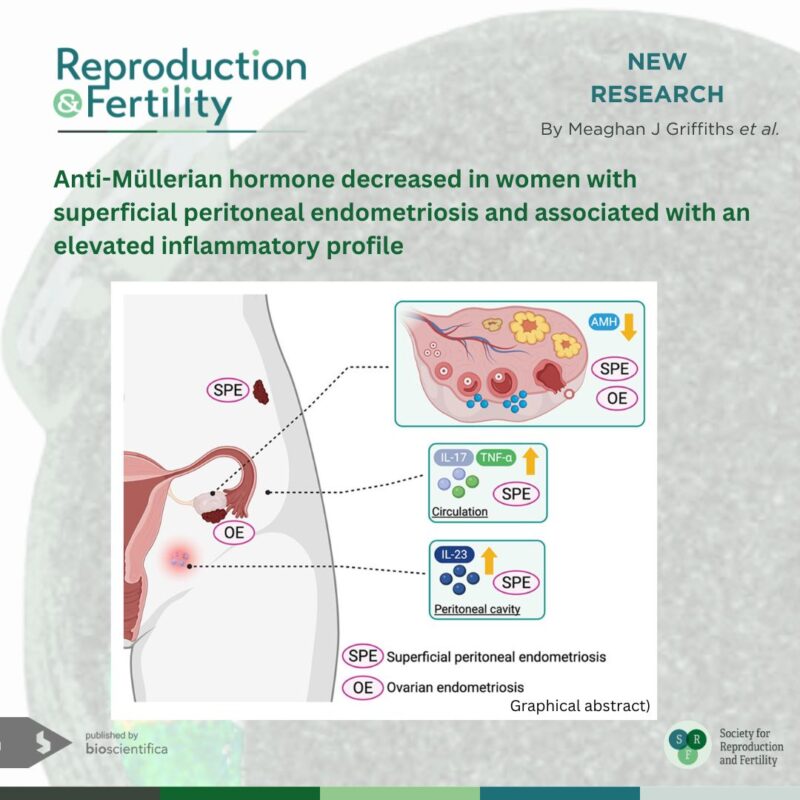
New research by Meaghan J Griffiths (The University of Edinburgh) et al. found that women with superficial peritoneal endometriosis (SPE) had lower levels of anti-Müllerian hormone (AMH), a marker of ovarian reserve, compared with women without endometriosis.
The study also identified elevated inflammatory markers in the serum and peritoneal fluid of women with SPE, supporting further investigation of inflammation as a possible mechanism underlying reduced ovarian reserve in SPE.
These findings highlight the need for further research into the mechanisms underlying infertility in women with SPE and the role inflammation may play in reproductive health.
Read the full article here.
Authors: Meaghan Griffiths, Martha Brown, Douglas Gibson, Frances Collins, Cheryl Dunlop, Philippa Saunders, and Andrew Horne.”
Stay updated on all scientific advances in the field of fertility with Fertility News.
-
Oct 29, 2026, 16:22Aysha O’Connor: One of the Hardest Parts of My Own Fertility Journey Was Loneliness…
-
Oct 29, 2026, 16:15Chaithra S K: Preimplantation Genetic Testing Still Requires an Embryo Biopsy
-
Oct 29, 2026, 16:11Filipina Woman’s Journey of Strength, Hope, and Finding Balance While Living with PCOS – PCOS Millennials
-
Oct 29, 2026, 15:58Eric Lameignere: Can DNA Fragmentation in Cumulus Cells Predict ICSI Outcomes?
-
Oct 29, 2026, 15:50Saadat Hassan: Sperm Function Testing – Can Advanced Diagnostics Guide IVF and ICSI Selection?
-
Oct 29, 2026, 15:34Sara Spiro: Celebrating the Stories Members Have Trusted With at Maven Clinic – Here Is Mine
-
Oct 29, 2026, 15:31Dina Ibrahem: 0 Motility, 1 Critical Decision
-
Oct 29, 2026, 15:28AI and Automation in Fertility and Genomics: Pipeline or Pipe Dream? – ARCS
-
Oct 29, 2026, 15:26Michael Schindler: Large Networks or Small Centers – Who Delivers Better Care?