
5 Articles Suggested by Christopher Robinson
Christopher Robinson, Associate Professor of Maternal-Fetal Medicine at the University of South Carolina and Executive Chair of the Foundation for the Society for Maternal-Fetal Medicine, shared some top articles on LinkedIn:
1. Primary hysterotomy location on the uterus
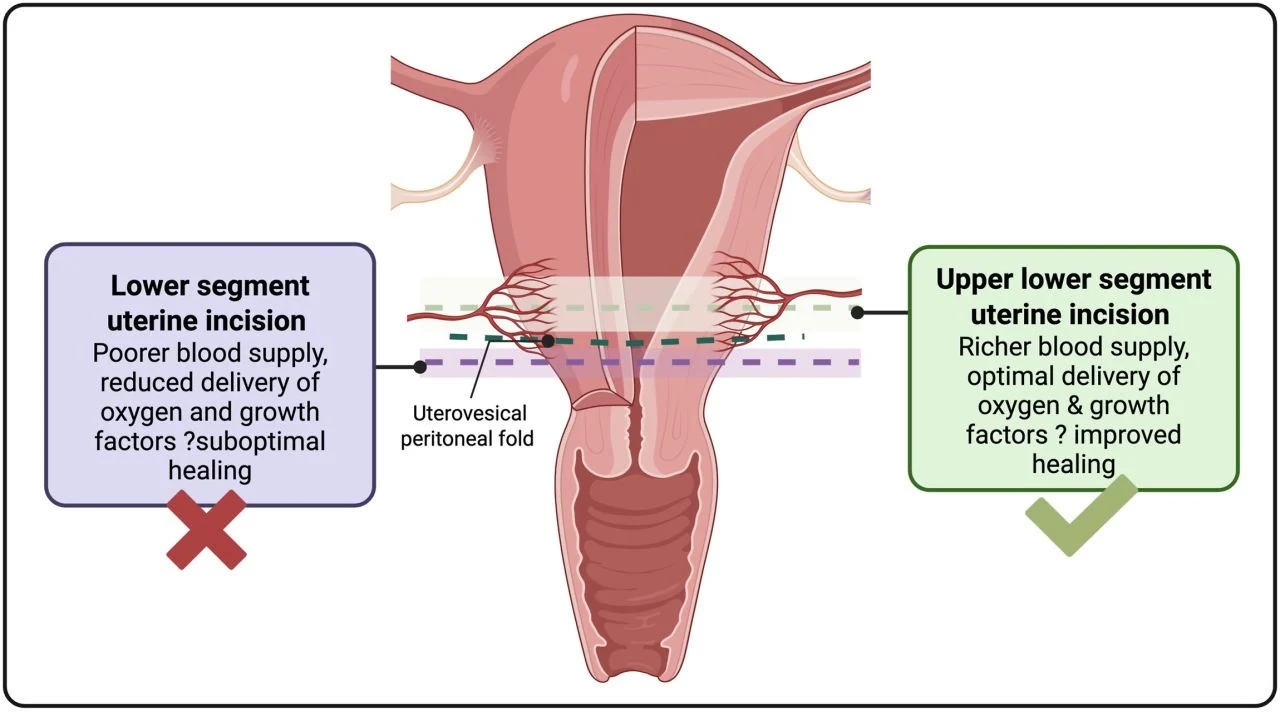
“Reducing the long-term impact of cesarean scar defects: a focus on prevention – Primary hysterotomy location on the uterus.
This figure demonstrates the typical location of uterine incision performed as a lower uterine incision. The upper uterine incision demonstrated is just above the uterovesical peritoneal fold, where there is a richer blood supply.
One hypothesis is that, at this location, where the blood supply is richer, oxygen and growth factors are delivered more effectively, leading to improved healing.”
Title: Reducing the long-term impact of cesarean scar defects: a focus on prevention
Authors: Sarah P. Walker, Helena C. Bartels, Davor Jurkovic, Eric Jauniaux
You can read the Full Article in the American Journal of Obstetrics and Gynecology.
2. Differences in the maternal plasma protein abundance
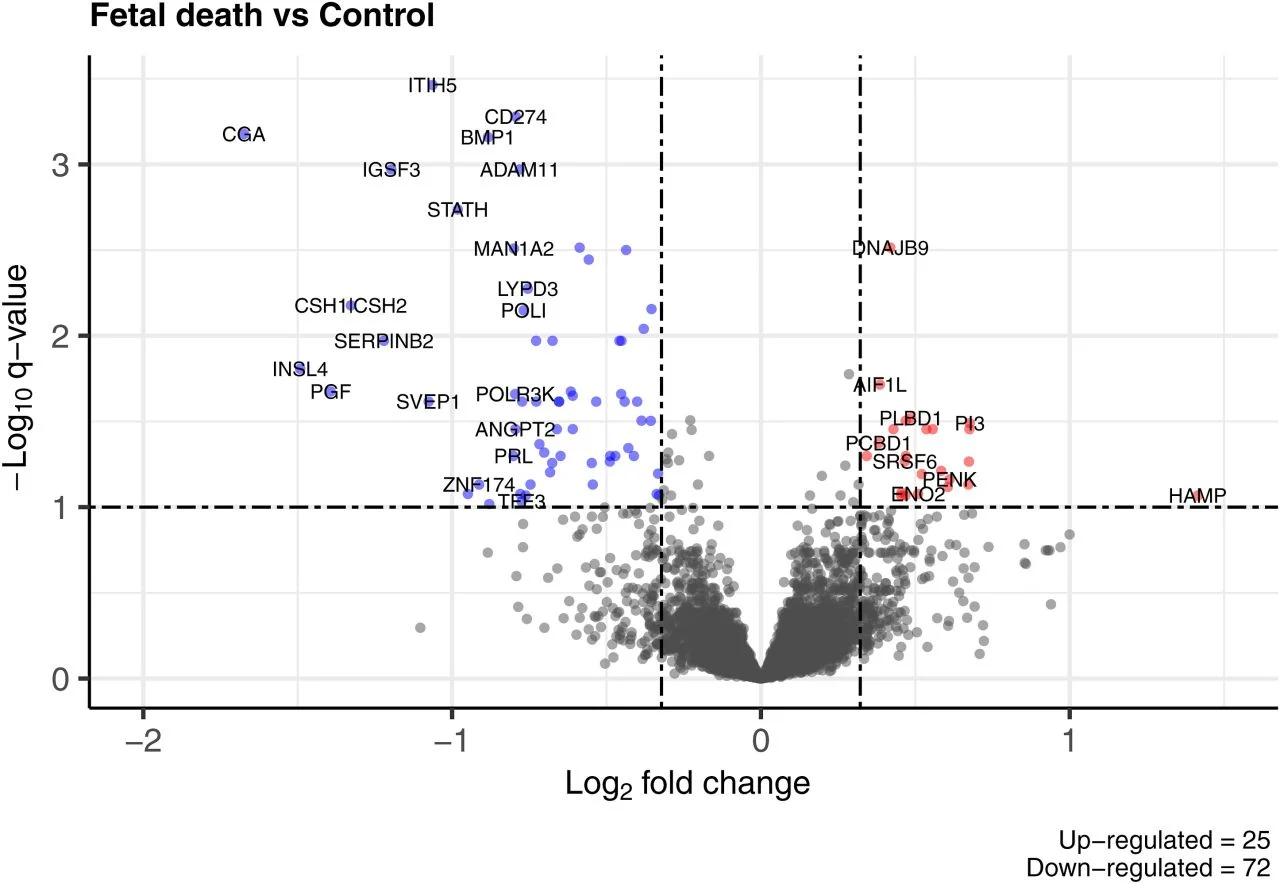
“New biomarkers for the detection of fetal death derived from large-scale proteomic analysis of maternal plasma – Differences in the maternal plasma protein abundance between fetal death and control pregnancies described in a volcano plot.
The figure shows a volcano plot of log10-transformed–adjusted P values against log2-transformed fold changes of maternal plasma proteins (identified by corresponding gene symbols) significantly changing in abundance between fetal death cases and controls.”
Title: New biomarkers for the detection of fetal death derived from large-scale proteomic analysis of maternal plasma
Authors: Roberto Romero, Gaurav Bhatti, Tinnakorn Chaiworapongsa, Nardhy Gomez-Lopez, Arun Meyyazhagan, Piya Chaemsaithong, Eunjung Jung, Awoniyi O. Awonuga, Yeon Mee Kim, Dereje W. Gudicha, Chong Jai Kim, David R. Bryant, Sonia S. Hassan, Adi L. Tarca
You can read the Full Article in the American Journal of Obstetrics and Gynecology.
3. Association between hematologic response to iron therapy
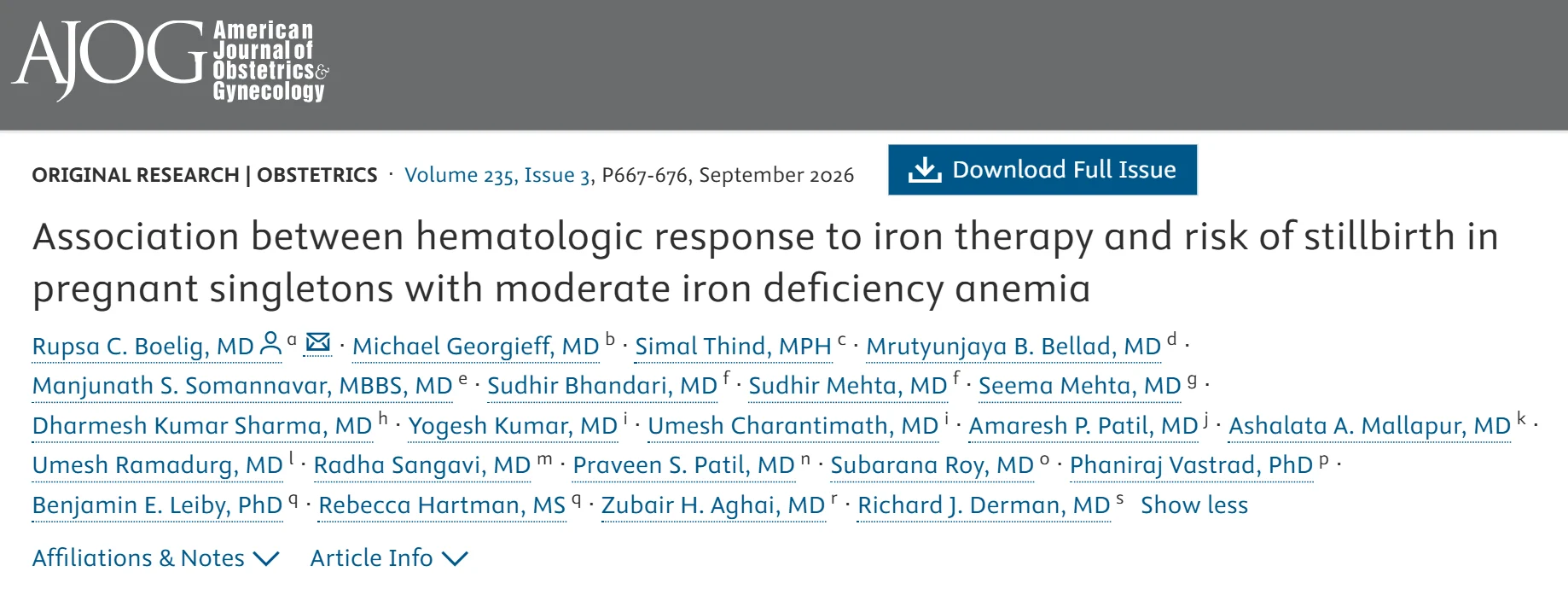
“Association between hematologic response to iron therapy and risk of stillbirth in pregnant singletons with moderate iron deficiency anemia.”
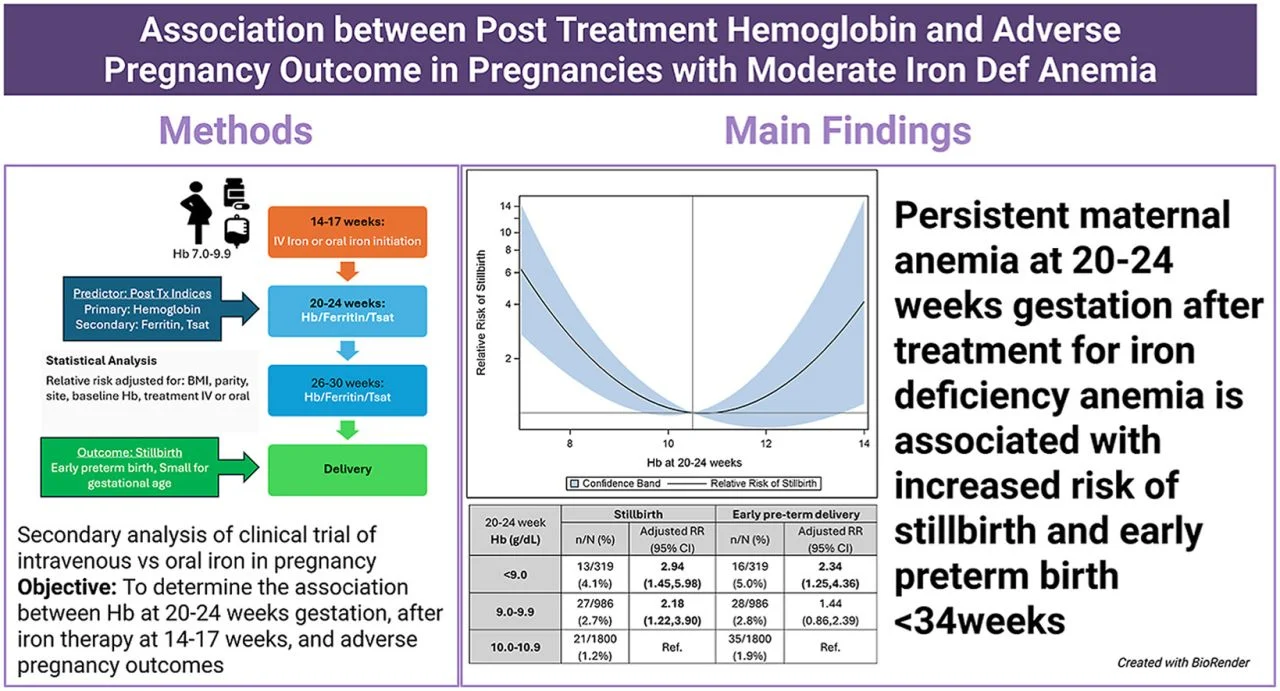
Title: Association between hematologic response to iron therapy and risk of stillbirth in pregnant singletons with moderate iron deficiency anemia
Authors: Rupsa C. Boelig, Michael Georgieff, Simal Thind, Mrutyunjaya B. Bellad, Manjunath S. Somannavar, Sudhir Bhandari, Sudhir Mehta, Seema Mehta, Dharmesh Kumar Sharma, Yogesh Kumar, Umesh Charantimath, Amaresh P. Patil, Ashalata A. Mallapur, Umesh Ramadurg, Radha Sangavi, Praveen S. Patil, Subarana Roy, Phaniraj Vastrad, Benjamin E. Leiby, Rebecca Hartman, Zubair H. Aghai, Richard J. Derman
You can read the Full Article in the American Journal of Obstetrics and Gynecology.
4. AJOG Expert Review in Cesarean
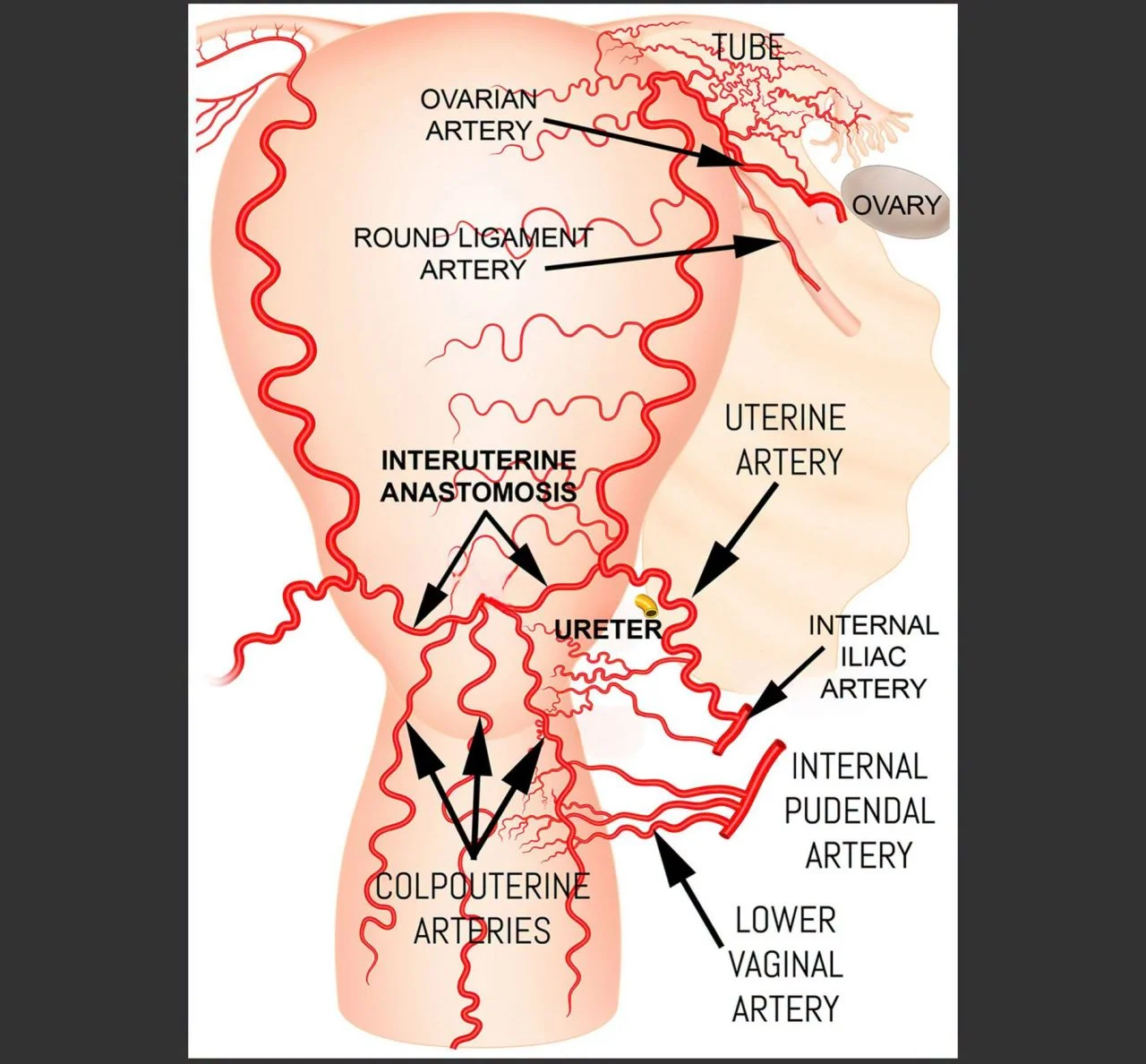
“AJOG Expert Review in Cesarean: Essential anatomical knowledge for performing routine and complex cesarean delivery – Uterine blood supply
Illustration depicting the classical uterine vasculature (ovarian and uterine arteries) and their principal superior and inferior anastomotic connections.
The extensive inferior vascular anastomotic network provides substantial collateral perfusion capacity that may persist despite the occlusion of both the uterine and ovarian arterial systems, necessitating consideration during hemostatic management. Arterial structures are delineated in red, and the ureter is distinctly visualized in yellow.”
Title: Essential anatomical knowledge for performing routine and complex cesarean delivery
Authors: José Miguel Palacios-Jaraquemada, Álbaro José Nieto-Calvache, Nicolás Andrés Basanta, Rozi Aditya Aryananda, Marcelo Alejandro Martínez
You can read the Full Article in the American Journal of Obstetrics and Gynecology.
5. External manual aortic compression during patient transports
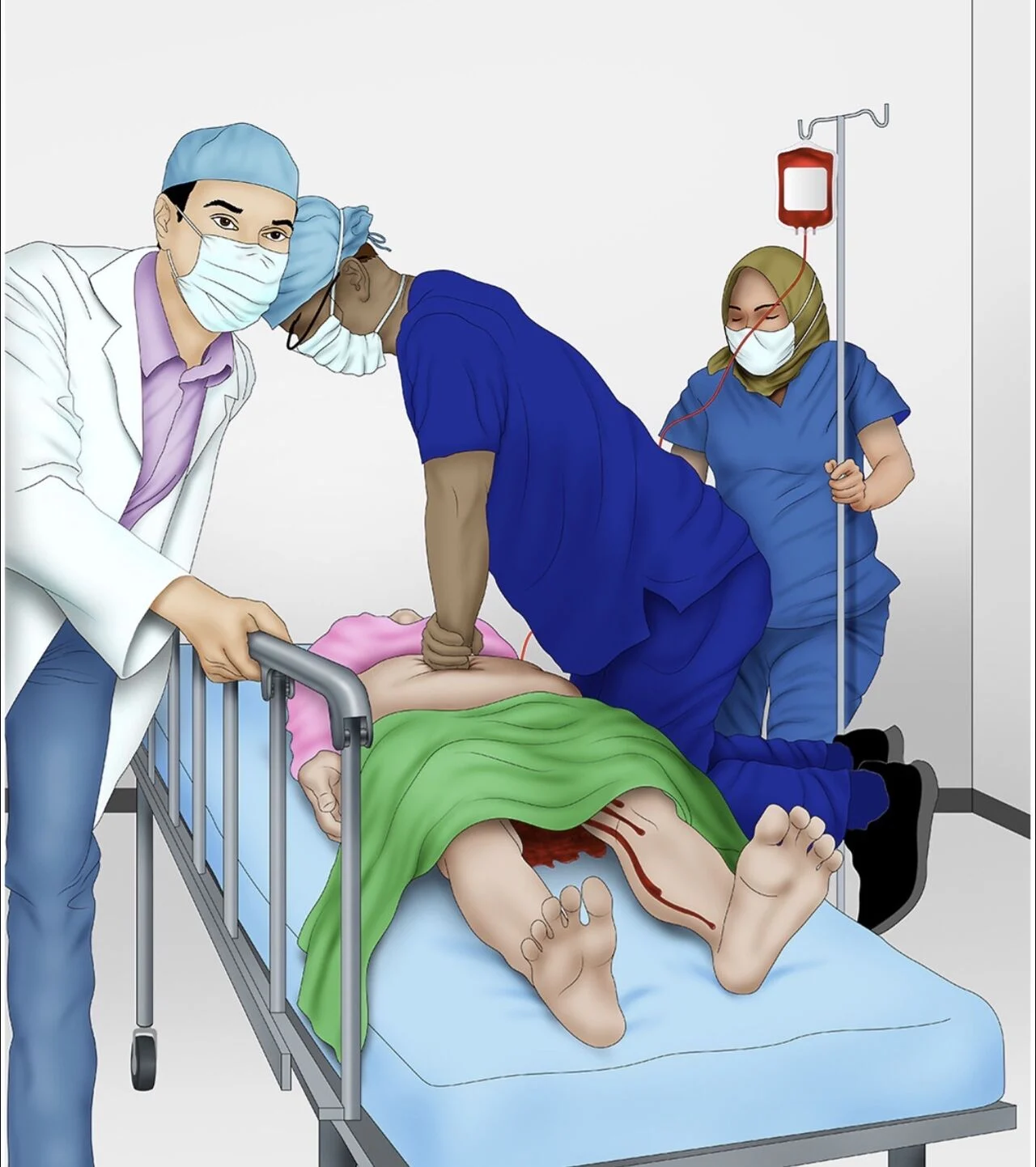
“AJOG Surgeon’s Corner: External aortic compression: buying time to save lives in obstetric hemorrhage – External manual aortic compression during patient transports
During intrahospital transfers, external manual aortic compression can be maintained if the operator kneels on the patient’s stretcher while she is being moved.
Manual compression applying the operator’s body weight on the patient’s abdomen (at the umbilical level) is maintained while the patient is transported on the stretcher to the operating room.”
Title: External aortic compression: buying time to save lives in obstetric hemorrhage
Authors: Albaro J. Nieto-Calvache, Jose M. Palacios-Jaraquemada, Rozi A. Aryananda, Nicolas Basanta, Nareswari Cininta, Luisa F. Rivera-Torres, Esperanza Bautista, Ahmed M. Hussein
You can read the Full Article in the American Journal of Obstetrics and Gynecology.
You can also read the previous “5 Articles Suggested by Christopher Robinson” on Fertility News.
-
Oct 16, 2026, 19:56Dina Ibrahem: Poor ICM vs. Poor TE
-
Oct 16, 2026, 19:47Sean Lauber: NIPT and Amniocentesis after PGT-A Reveal Few Abnormalities
-
Oct 16, 2026, 19:42Devyanshi Dixit: C-Section vs. Vaginal Birth – 2 Birth Paths, 2 Very Different Recoveries
-
Oct 16, 2026, 19:32Pawel Kordowitzki: Maternal Vitamin D Homeostasis, Pregnancy Outcomes and Offspring Health
-
Oct 16, 2026, 19:13Shizuko Takahashi: Our Study on Women’s Experiences of Assisted Reproductive Care in China Has Been Accepted by RBMO
-
Oct 16, 2026, 19:09ESHRE Announces ECRES-GESEA Reproductive Surgery Training and Certification in Slovenia
-
Oct 16, 2026, 18:20Kabita KB: What Happens if PLCZ1 Is Defective?
-
Oct 16, 2026, 18:12Partha Sarathi Das: From Reproductive Lifespan to Reproductive Healthspan
-
Oct 16, 2026, 18:05Joyce Harper: It Was a Pleasure to Give 2 Talks Celebrating World Menopause Day