
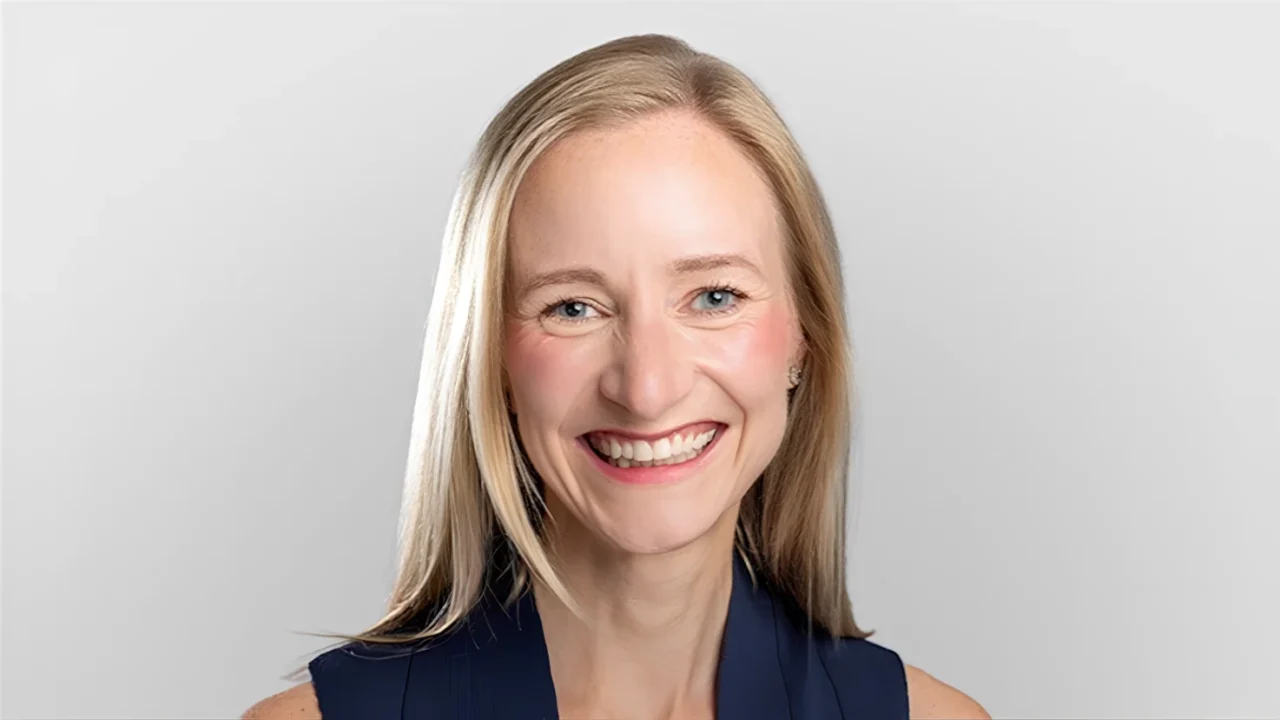
Jessica Preshaw: How Do We Know When Someone Is Good at Surgery?
Jessica Preshaw, Consultant Gynaecologist at North Bristol NHS Trust, shared on LinkedIn about a paper she co-authored with colleagues published in the American Journal of Obstetrics and Gynecology:
“How do we know when someone is good at surgery?
It sounds like a simple question. It isn’t.
Traditionally, surgical competence has been assessed through a combination of experience, case numbers and expert observation. But none of these necessarily tells us, objectively, how well an operation is being performed.
Really pleased to have been part of this international collaborative study, just published in the American Journal of Obstetrics and Gynecology, developing and clinically validating STELLAR: a structured tool for evaluating technical skills during laparoscopic and robotic hysterectomy.
Using unedited surgical videos, STELLAR assesses performance across defined phases of the operation, looking at retraction and exposure, execution, errors and the final result.
What I find particularly interesting is that this wasn’t simply an exercise in scoring surgical technique.
Better technical performance was associated with better clinical outcomes: shorter operating times, less blood loss and fewer postoperative complications.
That matters.
As surgery becomes increasingly digital and video-based, we have an opportunity to move from ‘you’ve done enough cases’ towards ‘you can demonstrate that you perform this operation well’.
Objective assessment could change how we train surgeons, how we provide meaningful feedback, how we credential for new procedures, and how we assure surgical quality throughout a career.
And hysterectomy is only the beginning. The same methodology could potentially be applied to more complex procedures, including endometriosis excision and myomectomy.
For me, this is one of the most exciting possibilities created by the convergence of surgery, robotics, video and data: not technology for technology’s sake, but using it to understand how we operate, and ultimately to make surgery safer and better for our patients.
A privilege to contribute alongside such a fantastic international group including Freweini Tesfai, Dr. Mohamed Mabrouk, Arvind Vashisht, Jeffrey Ahmed and Diego Raimondo.”
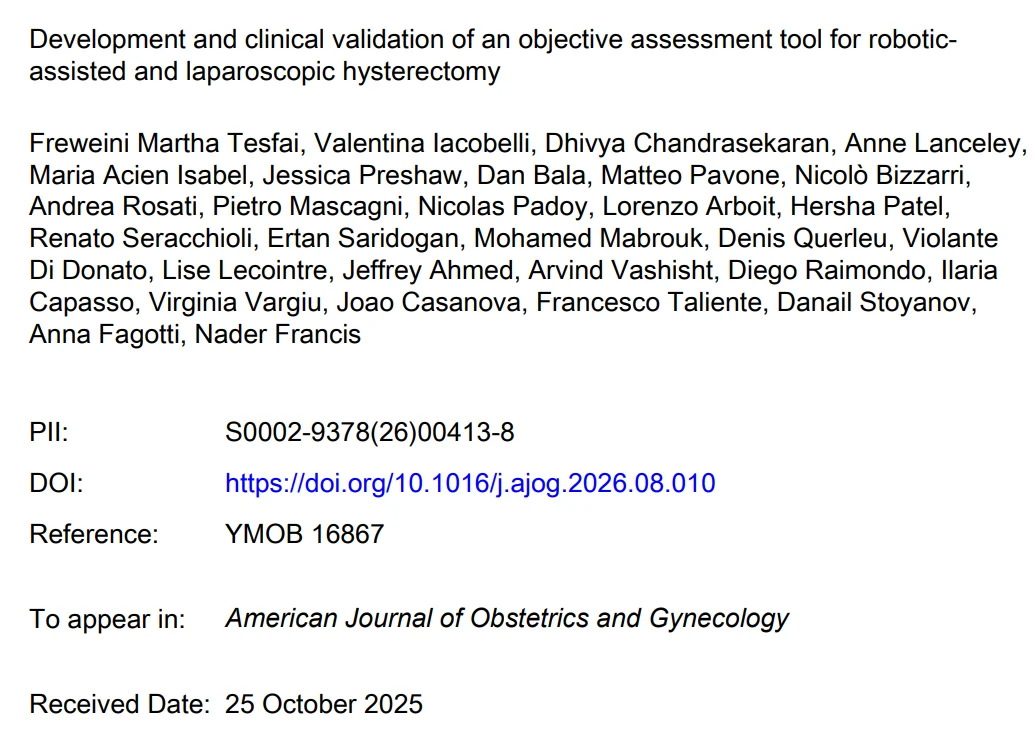
Title: Development and clinical validation of an objective assessment tool for robotic-assisted and laparoscopic hysterectomy
Authors: Freweini Martha Tesfai, Valentina Iacobelli, Dhivya Chandrasekaran, Anne Lanceley, Maria Acien Isabel, Jessica Preshaw, Dan Bala, Matteo Pavone, Nicolò Bizzarri, Andrea Rosati, Pietro Mascagni, Nicolas Padoy, Lorenzo Arboit, Hersha Patel, Renato Seracchioli, Ertan Saridogan, Mohamed Mabrouk, Denis Querleu, Violante Di Donato, Lise Lecointre, Jeffrey Ahmed, Arvind Vashisht, Diego Raimondo, Ilaria Capasso, Virginia Vargiu, Joao Casanova, Francesco Taliente, Danail Stoyanov, Anna Fagotti, Nader Francis
You can read the Full Article in the American Journal of Obstetrics and Gynecology.
Stay informed with the latest updates in fertility and reproductive medicine on Fertility News.
-
Oct 16, 2026, 19:56Dina Ibrahem: Poor ICM vs. Poor TE
-
Oct 16, 2026, 19:47Sean Lauber: NIPT and Amniocentesis after PGT-A Reveal Few Abnormalities
-
Oct 16, 2026, 19:42Devyanshi Dixit: C-Section vs. Vaginal Birth – 2 Birth Paths, 2 Very Different Recoveries
-
Oct 16, 2026, 19:32Pawel Kordowitzki: Maternal Vitamin D Homeostasis, Pregnancy Outcomes and Offspring Health
-
Oct 16, 2026, 19:13Shizuko Takahashi: Our Study on Women’s Experiences of Assisted Reproductive Care in China Has Been Accepted by RBMO
-
Oct 16, 2026, 19:09ESHRE Announces ECRES-GESEA Reproductive Surgery Training and Certification in Slovenia
-
Oct 16, 2026, 18:20Kabita KB: What Happens if PLCZ1 Is Defective?
-
Oct 16, 2026, 18:12Partha Sarathi Das: From Reproductive Lifespan to Reproductive Healthspan
-
Oct 16, 2026, 18:05Joyce Harper: It Was a Pleasure to Give 2 Talks Celebrating World Menopause Day