
Kothwal Zabeen: Understanding the Causes, Symptoms, Diagnosis and Management of PCOS
Kothwal Zabeen, Research and Documentation Intern at Clinivance TechLabs, shared on LinkedIn:
“Polycystic Ovary Syndrome (PCOS): Understanding the Causes, Symptoms, Diagnosis and Management.
Polycystic Ovary Syndrome (PCOS) is one of the most common hormonal conditions affecting women of reproductive age.
However, PCOS is much more than irregular periods. It can influence:
- hormonal balance,
- ovulation,
- skin health,
- metabolism,
- fertility,
- and overall well-being.
In this article, I explore the:
- causes,
- common symptoms,
- diagnostic approaches,
- long-term health risks,
- and available management options for PCOS.
Key takeaway: PCOS does not mean infertility, and it does not affect every woman in the same way. Early recognition, accurate diagnosis, and individualized care can make a meaningful difference.
Through health education and medical writing, my goal is to make important healthcare information easier to understand and encourage informed conversations about women’s health.
Let’s spread awareness, break misconceptions, and support women’s health through knowledge.
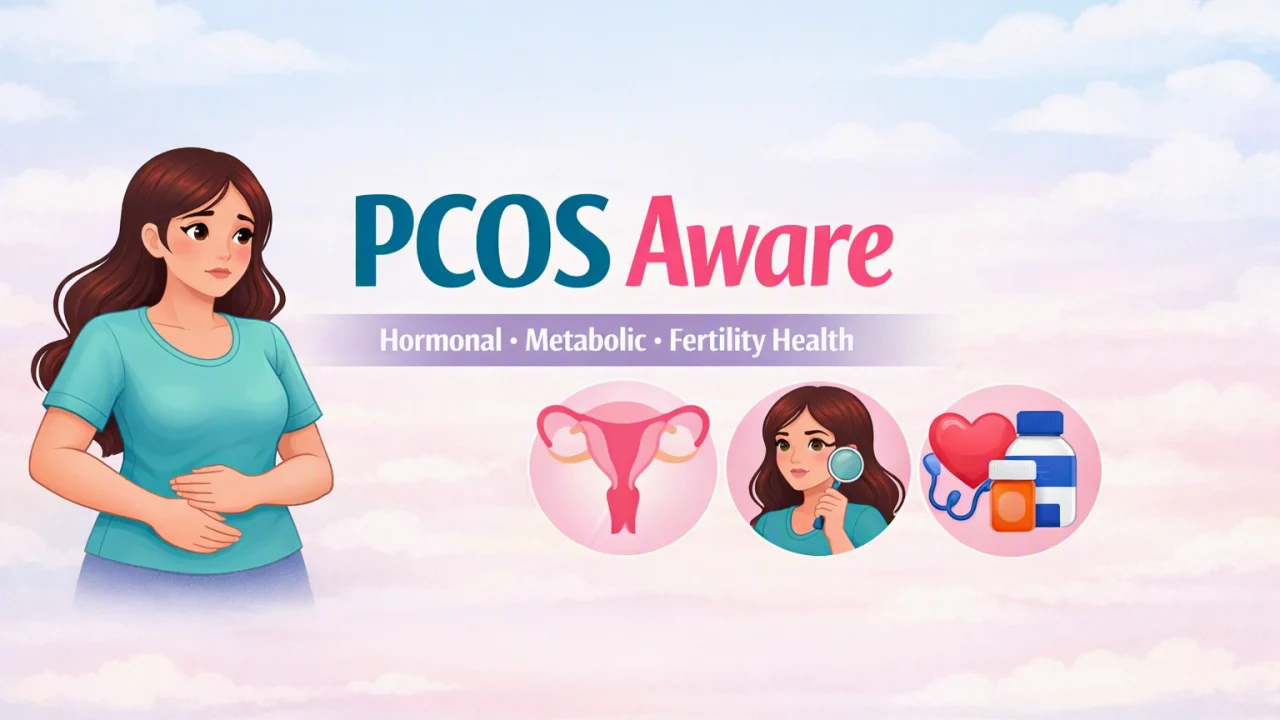
PCOS: Understanding the Condition Beyond the Irregular Periods
Polycystic ovary syndrome is one of the most common hormonal disorders affecting women of reproductive age.
Many of the people will associate this PCOS will associate this PCOS only with the irregular periods it is much more complex than that.
PCOS will affect the menstrual cycle, ovulation, hormones, metabolism, skin, and overall health.
What is PCOS?
Polycystic ovary syndrome is a hormonal and metabolic condition in which the ovaries produce higher-than-normal levels of androgens, and ovulation may become irregular.
Having ovarian cysts is not necessary to have PCOS. Some women have small follicles that will be visible on an ultrasound, while others will not.
Why does PCOS occur?
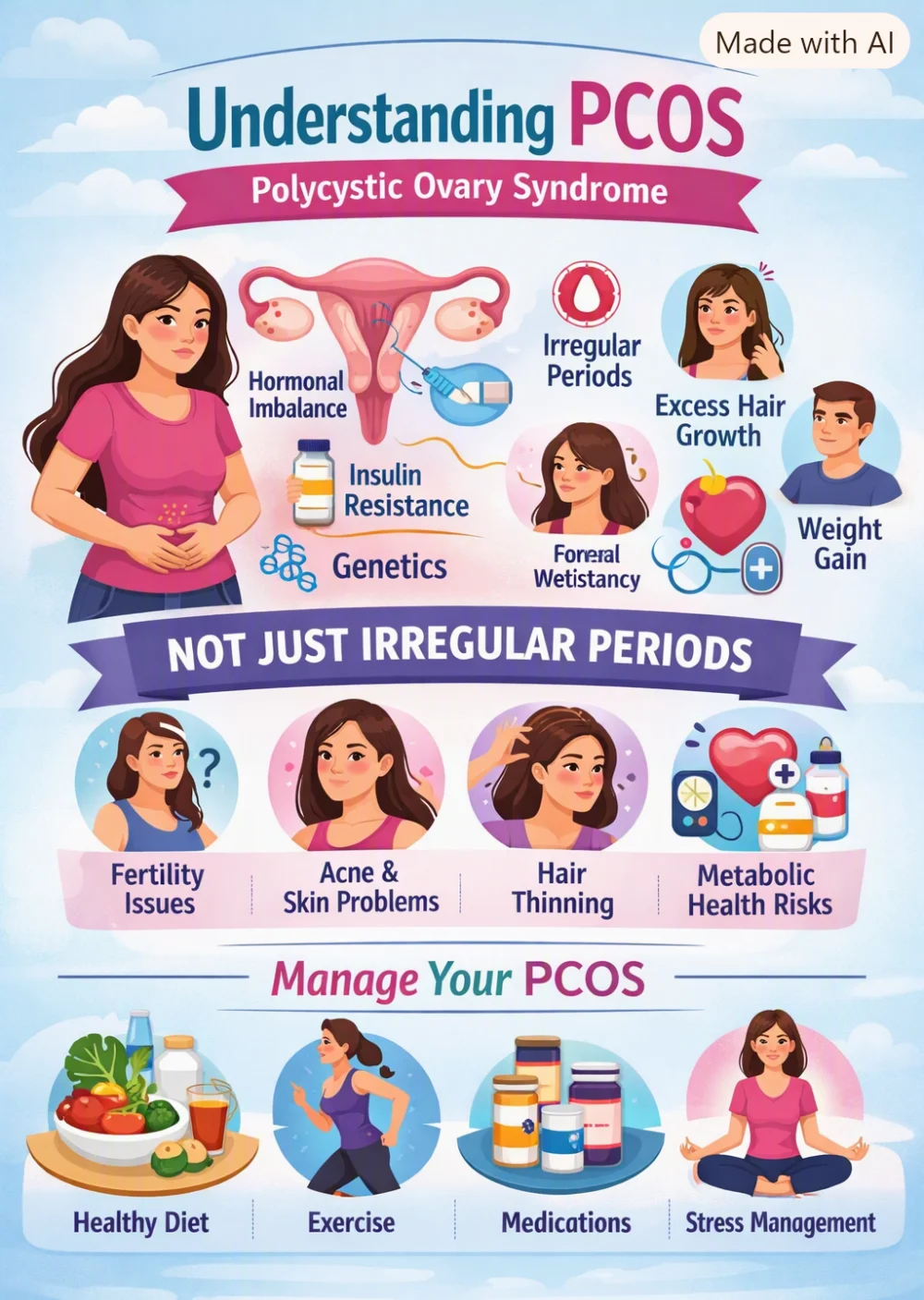
Several factors contribute to its development, including:
- Hormonal imbalance.
- Genetic Predisposition.
- Insulin Resistance.
- Increased Androgen production.
- Weight gain/ Obesity in some individuals.
- Lifestyle and environmental factors.
Insulin resistance is important because the body may need to produce more insulin to maintain normal blood glucose levels. The higher insulin levels will contribute to increased androgen production and interfere with normal ovulation.
However, PCOS will occur in women of different body sizes, so it should not be considered a condition that will affect only women who are overweight.
Symptoms of PCOS:
- Irregular Periods.
- Prolonged menstrual bleeding in a few women.
- Difficulty in ovulation.
- Difficulty becoming pregnant.
- Excess facial/ Body Hair.
- Acne/Oily skin.
- Hair thinning.
- Weight gain/losing weight.
- Darkening of the skin, particularly around the neck or other folds; this will appear in some women.
Not every woman will experience all of these symptoms.
How is PCOS diagnosed?
No single test will confirm PCOS.
Healthcare Professionals will generally consider a woman’s symptoms, medical history, physical examination, blood tests, and sometimes a pelvic ultrasound.
In adults, the diagnosis commonly involves identifying at least two or three features that will exclude the other possible causes:
- Absent or Irregular ovulation.
- Clinical or biochemical signs of increased androgen levels.
- The polycystic ovarian morphology on the ultrasound or depends on the diagnostic approach, other than the validated ovarian criteria.
Because several other medical conditions will cause similar symptoms, proper evaluation is important.
PCOS and Fertility.
PCOS does not mean infertility.
Many of the women with PCOS become pregnant naturally, while the others will benefit from the lifestyle changes, ovulation inducing medicines, or depends on their individual circumstances.
Will PCOS affect long-term health?
Some women with the PCOS have the increased risk of:
- Abdominal cholesterol Levels.
- Insulin resistance and type 2 diabetes.
- High blood pressure.
- Cardiovasular risk factors.
- Endometrial problems caused by the prolonged periods without ovulation.
- Mental health concerns such as the anxiety and depression.
The level of the risk varies between the individuals and that can be influenced by the factors, metabolic health, lifestyle and the family history.
How is PCOS managed?
PCOS can be managed and it is completely depends on the individual’s symptoms and the goals.
It will include:
- A balanced, sustainable diet.
- Regular physical activity.
- Weight management.
- Improving sleep and managing stress.
- Medicines to regulate the periods.
- Treatment for acne or excess hair when required.
- Medicines that will improve insulin sensitivity in the selected patients.
- Fertility treatment when pregnancy is desired.
Can PCOS be prevented?
There is no guaranteed way to prevent PCOS because genetics and other biological factors play a role.
However, maintaining a healthy lifestyle, staying physically active, getting adequate sleep, and also addressing metabolic risk factors can support overall health and will help to manage the symptoms.
Conclusion:
PCOS is not simply an irregular period problem, and it is not synonymous with ovarian cysts.
It is a complex condition that will affect reproductive, hormonal, metabolic, and emotional health.
Early recognition, the appropriate diagnosis, and individualized management can make a significant difference.
Most importantly, having PCOS will not mean that women cannot lead a healthy life or have children.
With the appropriate care and the support and many of the women will successfully manage PCOS and to achieve their health and the reproductive health.”
Other articles featuring Kothwal Zabeen on Fertility News.
-
Oct 16, 2026, 19:56Dina Ibrahem: Poor ICM vs. Poor TE
-
Oct 16, 2026, 19:47Sean Lauber: NIPT and Amniocentesis after PGT-A Reveal Few Abnormalities
-
Oct 16, 2026, 19:42Devyanshi Dixit: C-Section vs. Vaginal Birth – 2 Birth Paths, 2 Very Different Recoveries
-
Oct 16, 2026, 19:32Pawel Kordowitzki: Maternal Vitamin D Homeostasis, Pregnancy Outcomes and Offspring Health
-
Oct 16, 2026, 19:13Shizuko Takahashi: Our Study on Women’s Experiences of Assisted Reproductive Care in China Has Been Accepted by RBMO
-
Oct 16, 2026, 19:09ESHRE Announces ECRES-GESEA Reproductive Surgery Training and Certification in Slovenia
-
Oct 16, 2026, 18:20Kabita KB: What Happens if PLCZ1 Is Defective?
-
Oct 16, 2026, 18:12Partha Sarathi Das: From Reproductive Lifespan to Reproductive Healthspan
-
Oct 16, 2026, 18:05Joyce Harper: It Was a Pleasure to Give 2 Talks Celebrating World Menopause Day