
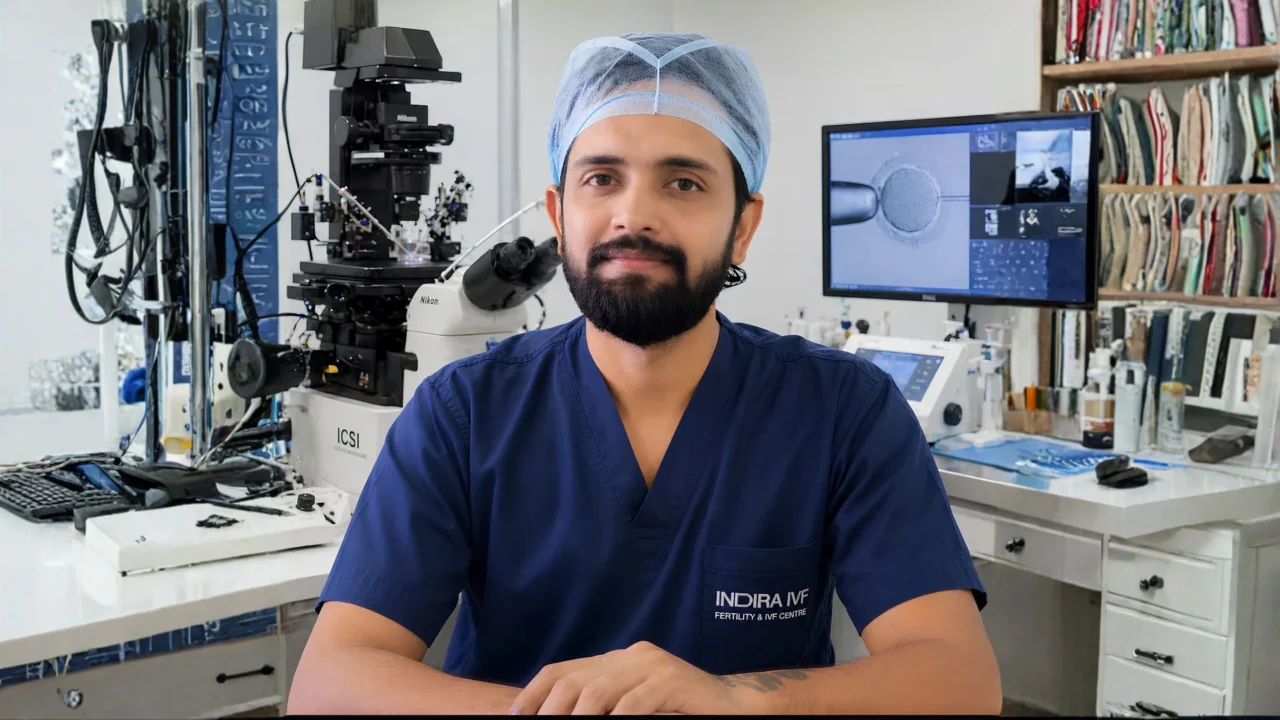
Nitin Kataria: Pre-IVF Optimization May Improve Blastulation Rates
Nitin Kataria, Senior Clinical Embryologist and Quality Manager at Indira IVF Group, shared a post on LinkedIn:
“We obsess over culture conditions and media batches. But here’s what most of us overlook:
The blastulation battle is often won or lost BEFORE the patient even comes to our lab.
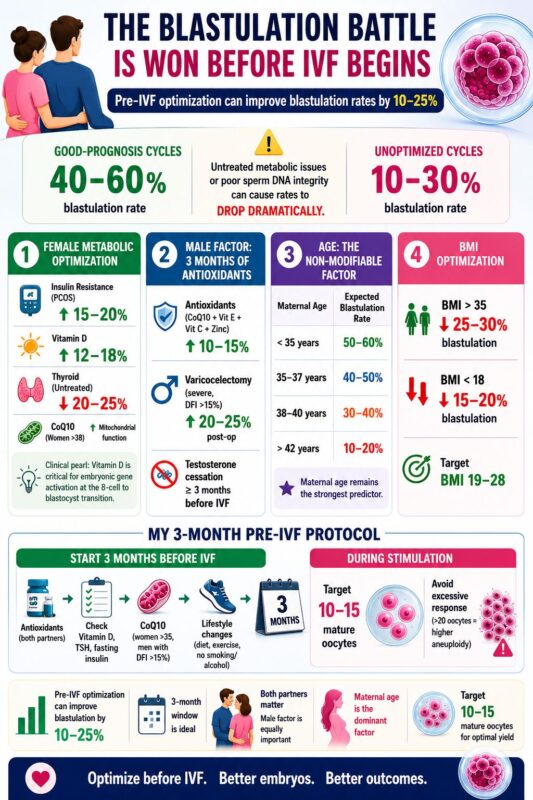
In good-prognosis cycles, we expect 40–60% blastulation rates. But with untreated metabolic issues or poor sperm DNA integrity? Those numbers drop dramatically.
Pre-IVF optimization can improve blastulation rates by 10–25%.
Pre-IVF Interventions That Matter Most
1. Female Metabolic Optimization
- Intervention | Impact |
- Insulin resistance(PCOS) | ↑ 15–20% |
- Vitamin D |↑ 12–18% |
- Thyroid | Untreated ↓ 20–25% |
- CoQ10 | ↑ Mitochondrial function in women >38 |
Clinical pearl: Vitamin D is critical for embryonic gene activation at the 8-cell to blastocyst transition.
2. Male Factor: 3 Months of Antioxidants
- Intervention | Impact |
- Antioxidants (CoQ10 + Vit E + Vit C + Zinc) | ↑ 10–15% |
- Varicocelectomy (severe, DFI >15%) | ↑ 20–25% post-op |
- Testosterone cessation | ≥3 months before IVF (critical!) |
3. Age: The Non-Modifiable Factor
- Maternal Age | Expected Blastulation |
- <35 years | 50–60% |
- 35–37 years | 40–50% |
- 38–40 years | 30–40% |
- >42 years | 10–20%
- Maternal age remains the strongest predictor.
4. BMI Optimization
- BMI >35 ↓ blastulation by 25–30%
- BMI <18 ↓ blastulation by 15–20%
- Target: 19–28
My 3-Month Pre-IVF Protocol
Start 3 months before IVF:
- Antioxidants (both partners)
- Check Vitamin D, TSH, fasting insulin
- CoQ10 (women >35, men with DFI >15%)
- Lifestyle changes (diet, exercise, no smoking/alcohol)
During stimulation:
- Target 10–15 mature oocytes
- Avoid excessive response (>20 oocytes = higher aneuploidy)
- Pre-IVF optimization can improve blastulation by 10–25%**
- 3 month window is ideal
- Both partners matter male factor is equally important
- Maternal age is the dominant factor
- Target 10–15 mature oocytes for optimal yield.”
Stay updated on all scientific advances in the field of fertility with Fertility News.
-
Oct 16, 2026, 19:56Dina Ibrahem: Poor ICM vs. Poor TE
-
Oct 16, 2026, 19:47Sean Lauber: NIPT and Amniocentesis after PGT-A Reveal Few Abnormalities
-
Oct 16, 2026, 19:42Devyanshi Dixit: C-Section vs. Vaginal Birth – 2 Birth Paths, 2 Very Different Recoveries
-
Oct 16, 2026, 19:32Pawel Kordowitzki: Maternal Vitamin D Homeostasis, Pregnancy Outcomes and Offspring Health
-
Oct 16, 2026, 19:13Shizuko Takahashi: Our Study on Women’s Experiences of Assisted Reproductive Care in China Has Been Accepted by RBMO
-
Oct 16, 2026, 19:09ESHRE Announces ECRES-GESEA Reproductive Surgery Training and Certification in Slovenia
-
Oct 16, 2026, 18:20Kabita KB: What Happens if PLCZ1 Is Defective?
-
Oct 16, 2026, 18:12Partha Sarathi Das: From Reproductive Lifespan to Reproductive Healthspan
-
Oct 16, 2026, 18:05Joyce Harper: It Was a Pleasure to Give 2 Talks Celebrating World Menopause Day