
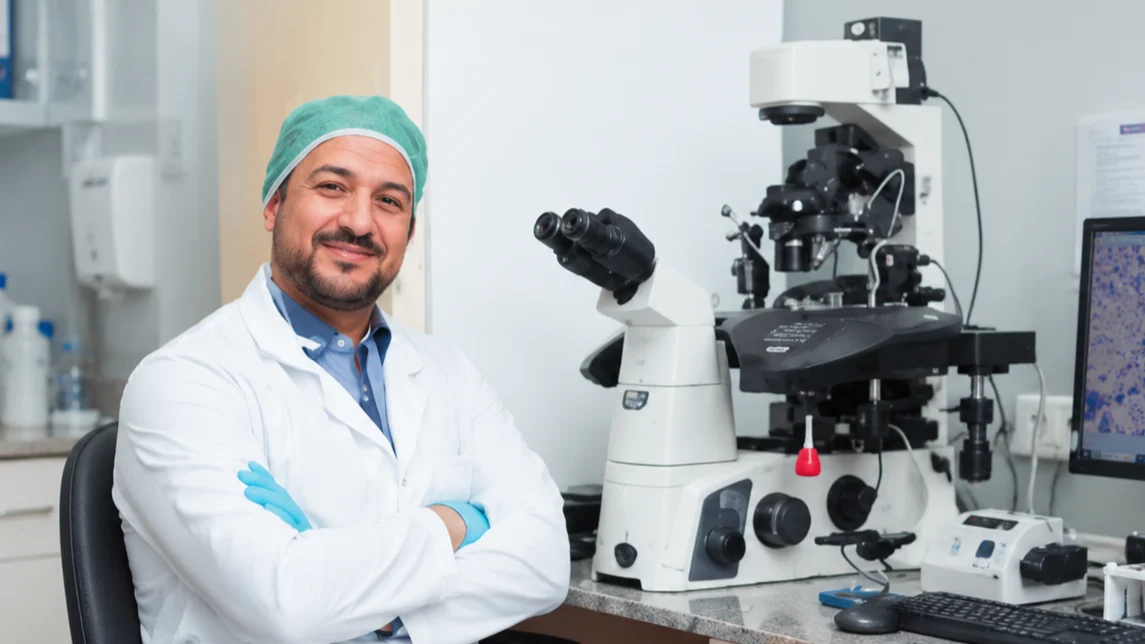
Emad Sedeek: New Technologies in the IVF Laboratory
Emad Sedeek, IVF Lab Director at New Hope IVF, shared a post on LinkedIn:
“Emerging Technologies in the IVF Laboratory: Updates from ESHRE Guidelines, Consensus Documents, and Recommendations 2026.
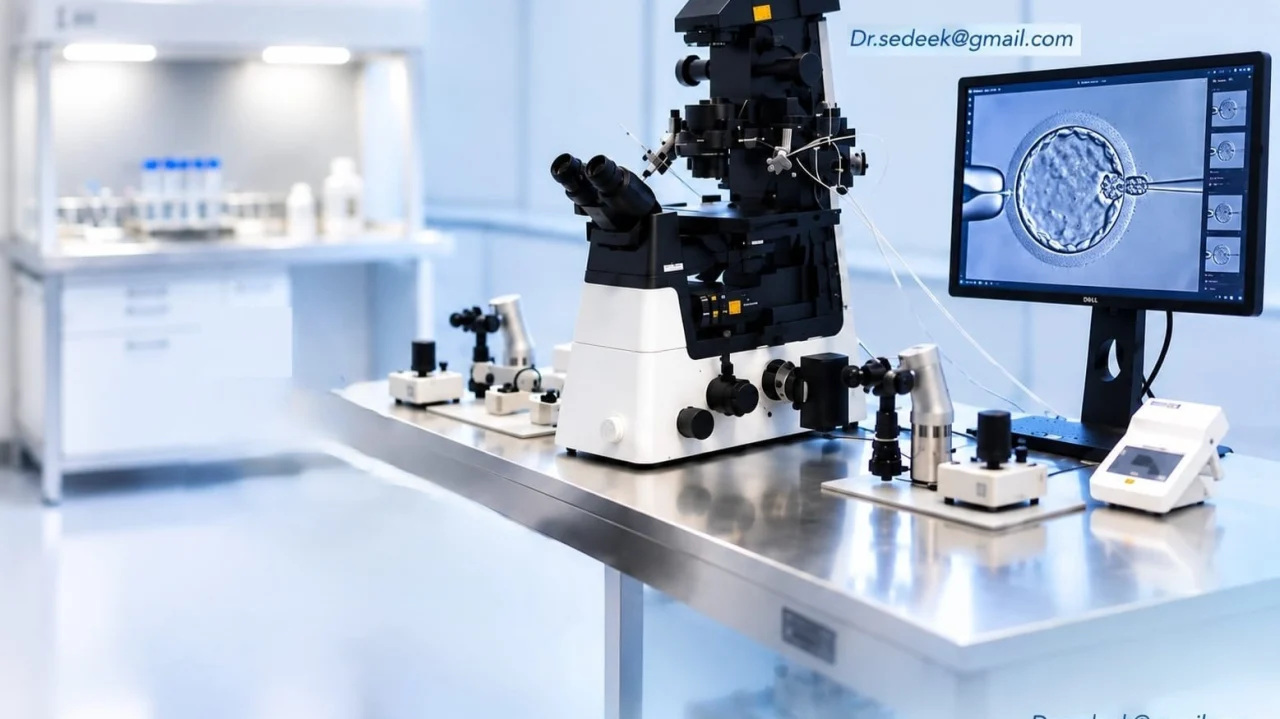
New Technologies in the IVF Laboratory: Integrating Innovation with Experience for Evidence-Based, Patient-Centered Care
The IVF laboratory is entering a new era
Over the past decades, advances in embryology, culture systems, vitrification, micromanipulation, time-lapse imaging, genetic testing, microfluidic chips, automation, and artificial intelligence (AI) have transformed assisted reproductive technology (ART). However, the future of IVF should not be defined by technology alone.
The real opportunity lies in integrating new technologies with the experience of skilled embryologists and the best available scientific evidence to deliver safer, more consistent, efficient, and patient-centered care.
The question is no longer whether IVF laboratories should adopt new technologies.
The more important question is, how can we integrate these technologies responsibly while preserving professional judgment, scientific base, and the human element of fertility care?
From Experience-Based Practice to Evidence-Integrated Practice, experience remains one of the most valuable assets in an IVF laboratory.
An experienced embryologist develops the ability to recognize subtle biological variations, understand laboratory aspects, identify unexpected patterns, troubleshoot problems, and make decisions in situations where published evidence may not provide a complete answer.
However, experience alone is not enough; modern IVF laboratories should combine three major sources of knowledge:
- Clinical and laboratory experience
- Scientific evidence
- Data-driven technology
This creates a more powerful decision-making model in which technology supports the embryologist rather than replacing professional expertise.
The updated 2026 ESHRE recommendations emphasize that good IVF laboratory practice should be based, where available, on the best available literature together with expert knowledge and consensus. They also emphasize quality management, validation, risk assessment, KPIs, traceability, and continuous improvement.
AI as a Decision-Support Tool, Not a Replacement for the Embryologist
Artificial intelligence has the potential to analyze enormous amounts of data that would be difficult for a human being to process consistently.
In IVF, AI may assist with:
- Embryo image and morphokinetic analysis Embryo selection and prioritization
- Oocyte and sperm assessment
- Prediction modeling
- Detection of laboratory trends
- Quality-control monitoring
- Identification of abnormal patterns
- Workflow optimization
- Witnessing system
- Predictive maintenance of laboratory equipment
- Data integration across clinical and laboratory systems
But an AI prediction is not automatically a clinical truth.
An algorithm may identify a statistical association without fully understanding the biological context of each single patient. Therefore, the embryologist must remain responsible for interpreting AI-generated information within the clinical and laboratory context.
The Power of Human-AI Collaboration
The most effective IVF laboratory of the future will probably not be a laboratory without embryologists. It will be a laboratory where embryologists work with intelligent systems.
For example, an AI system may identify two embryos with similar developmental characteristics; the experienced embryologist can then consider additional factors such as:
- Patient history
- Previous treatment outcomes
- Embryo development
- Laboratory-specific performance
- Culture conditions
- Genetic information when available
- Clinical strategy
Limitations of the AI model

A technology may be impressive, commercially attractive, or supported by promising preliminary studies, but that does not automatically mean it improves patient outcomes.
New technologies and add-ons must be validated before they become part of clinical practice.
One of the greatest risks in modern IVF is adopting technology simply because it is new.
Before implementation, IVF laboratories should ask:
- Does this technology improve clinical outcomes?
- Is the evidence reproducible?
- Has it been validated in our patient population and laboratory environment?
- Does it improve safety, consistency, efficiency, or quality?
- What are the potential risks and failure modes?
- How will we monitor its performance after implementation?
The 2026 ESHRE recommendations emphasize documented validation of critical processes and qualification of critical equipment, together with risk-based change control and ongoing quality review.
Therefore, introducing AI or automation should itself be treated as a quality-management project, rather than simply an equipment purchase.
Data Is the New Laboratory Asset
The modern IVF laboratory generates enormous amounts of data:
- Fertilization rates
- Cleavage patterns
- Blastulation rates
- Blastocyst quality
- Cryosurvival
- Warming outcomes
- ICSI performance
- Sperm parameters
- Incubator parameters
- Temperature and gas monitoring
- Embryo development
- Laboratory KPIs
- Clinical outcomes
The real value comes when these data are connected.
A sophisticated laboratory can move from simply asking:
‘What happened?’ to: ‘Why did it happen?’ and eventually: ‘Can we predict it before it happens?’
This is where AI, advanced analytics, and laboratory information systems can become powerful tools for continuous improvement.
Technology + KPIs + Root Cause Analysis
AI should not operate independently from the laboratory quality system.
For example, if blastocyst development suddenly decreases, an intelligent monitoring system could identify a pattern involving:
- Incubator performance
- Gas stability
- Temperature shifted
- Media lot changes
- Operator malpractices
- Culture duration
- Patient characteristics
- Sperm or oocyte factors
However, the technology should generate a signal, not automatically declare the cause.
The laboratory team must then investigate through structured approaches such as:
KPI analysis – trend detection – root cause analysis – CAPA – validation – monitoring.
This approach transforms technology into a practical quality-improvement system.
Digital Witnessing and Traceability
Another important area is patient safety. Electronic witnessing, barcode systems, RFID-based identification, digital traceability, and integrated laboratory information systems can significantly strengthen identification and traceability processes.
The 2026 ESHRE recommendations emphasize unique patient identification, traceability of reproductive cells and tissues, documentation of critical steps, and the use of second-person witnessing and/or electronic identification systems at critical stages.
This illustrates an important principle:
Technology should be used where it can reduce human error and strengthen patient safety.
The goal is not to eliminate human involvement but to build systems in which human expertise operates within a safer technological environment.
Patient-Centered Care Must Remain the Final Goal
The ultimate purpose of every technological development in IVF is not to produce more data; it is to improve care for patients.
Patients do not undergo IVF to achieve a better laboratory KPI. They undergo IVF because they want the best possible opportunity to have a healthy live birth; therefore, every innovation should ultimately be evaluated against meaningful patient-centered outcomes, including:
- Safety
- Clinical and cost effectiveness
- Cumulative outcomes
- Live birth
- Transparency
- Appropriate use of resources
- Reduction of avoidable risks
- Technology should never become an end in itself.
Building the IVF Laboratory of the Future
The IVF laboratory of the future should be built around five pillars:
1. Human Expertise
Experienced embryologists remain central to interpretation, troubleshooting, clinical communication, and complex decision-making.
2. Scientific Evidence
New technologies and add-ons should be assessed against peer-reviewed evidence, professional recommendations, and appropriately designed randomized clinical studies.
3. Artificial Intelligence and Automation
AI and automation should improve consistency, data analysis, prediction, monitoring, and workflow efficiency.
4. Quality Management
Every technological change should be validated, risk assessed, monitored through KPIs, and incorporated into the laboratory’s QMS.
5. Patient-Centered Outcomes
The ultimate measure of success should be meaningful improvement in patient care and outcomes—not simply technological sophistication.
Conclusion
The real advancement will come from integrating technology with human experience, scientific evidence, robust quality systems, and patient-centered thinking.
The question should never be, ‘Can AI replace the embryologist?’
A better question is, ‘How can AI help an experienced embryologist make better, safer, and more evidence-informed decisions for every patient?”
That is where the future of IVF lies.
Not human versus technology – but human expertise empowered by technology, guided by evidence, protected by quality systems, and ultimately focused on the patient.
The 2026 ESHRE Recommendations on Good Practice in the IVF Laboratory reinforce this direction by integrating available evidence, expert knowledge, quality management, risk assessment, validation, traceability, and continuous improvement across IVF laboratory practice.”
Other articles featuring Emad Sedeek on Fertility News.
-
Sep 13, 2026, 15:11Sachintha Alwis: From Impaired Sperm Motility to Microrobotics
-
Sep 13, 2026, 15:08Laurence Orbuch: Before Endometriosis Surgery, Ask…
-
Sep 13, 2026, 15:05Ademola Ayodele: IUI, IVF or Egg Freezing – Which One Is Right for You?
-
Sep 13, 2026, 14:59Fiona Pathiraja-Møller: Tennis Players No Longer Have to Choose Between Career and Family
-
Sep 13, 2026, 14:571-Day Virtual Experience for People Impacted by PMOS – PCOS Awareness Association
-
Sep 13, 2026, 14:53Ozor Victor: Behind Every Embryo Is a Story of Science, Precision, and Hope
-
Sep 13, 2026, 14:50Diana Kayal: What They Don’t Tell You About IVF
-
Sep 13, 2026, 14:44Vikram Sinai Talaulikar: A Heartfelt Thank You to All Who Donated and Supported “Menopause and Cancer”
-
Sep 13, 2026, 14:41Nicole McPherson: Changing IVF Practices Is Hard – Integration Needs to Be Easy