

Devyanshi Dixit: C-Section vs. Vaginal Birth – 2 Birth Paths, 2 Very Different Recoveries
Devyanshi Dixit, Program Manager at CLS Event and Publication and Conference Manager at the 12th Global Summit on Gynecology, Fertility and Women’s Health, shared on LinkedIn:
“Two birth paths. Two very different recoveries.
C-section vs. Vaginal Birth: What Really Changes in Blood Loss, Pain, and Healing?
Birth is not a competition. But understanding the differences can help families make informed decisions and prepare for recovery.
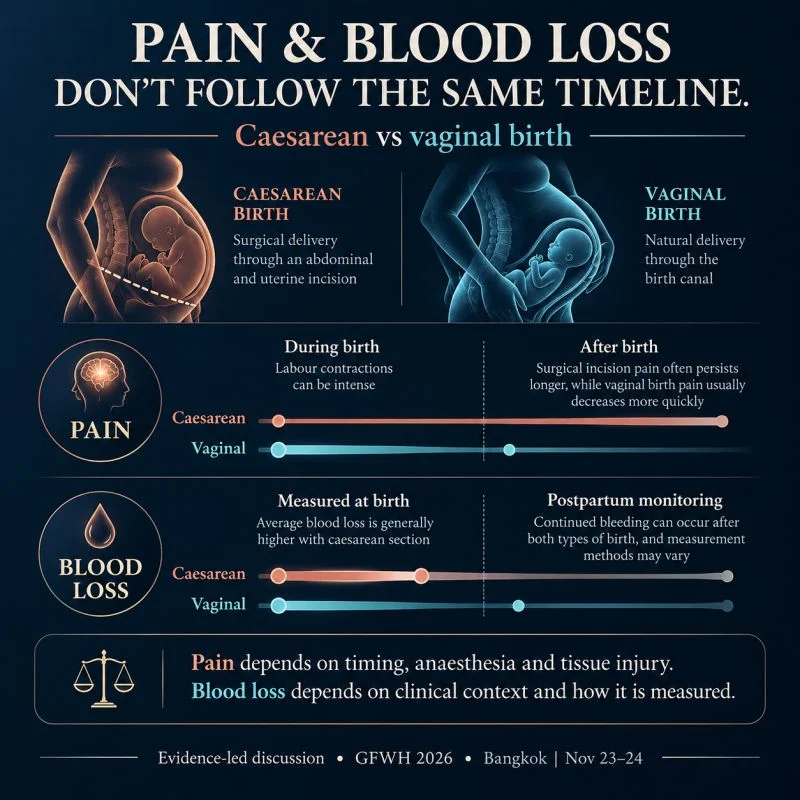
Blood loss
Vaginal birth: Average blood loss is around 500 mL.
C-section: Average blood loss is around 1,000 mL.
A C-section generally involves more blood loss because it is major abdominal surgery. However, either type of birth can cause severe bleeding, and individual circumstances matter.
Pain: Different sources
Vaginal birth: Pain is often most intense during labour. After delivery, soreness, perineal tears, stitches, or pelvic discomfort may affect movement and sitting.
C-section: Anaesthesia usually helps control pain during surgery, but abdominal incision pain and tenderness can become more noticeable as it wears off. Coughing, laughing, standing, and getting out of bed may hurt during recovery.
Recovery: What should you expect?
Vaginal birth: Many women resume everyday activities sooner, although complicated births, severe tears, or pelvic-floor injuries can extend recovery.
C-section: Recovery often takes longer because the abdominal wall and uterus need to heal after surgery. Lifting, driving, and strenuous activity may be restricted for a period.
The point we shouldn’t miss
Vaginal birth is not always easier, and a C-section is not always the harder experience for every mother. Labour duration, emergency complications, pain management, previous surgery, and individual health can change the picture.
A medically necessary C-section can be lifesaving. The safest birth plan is the one that best protects the mother and baby – not the one that wins a comparison.
Every birth deserves informed choices, respectful care, and a recovery plan that includes the mother’s needs.
What do you think deserves more attention in birth preparation: understanding delivery options or planning for postpartum recovery?
- November 23–24
- Bangkok, Thailand
- Virtual Participation.”
Other articles featuring Devyanshi Dixit on Fertility News.
-
Oct 16, 2026, 19:56Dina Ibrahem: Poor ICM vs. Poor TE
-
Oct 16, 2026, 19:47Sean Lauber: NIPT and Amniocentesis after PGT-A Reveal Few Abnormalities
-
Oct 16, 2026, 19:32Pawel Kordowitzki: Maternal Vitamin D Homeostasis, Pregnancy Outcomes and Offspring Health
-
Oct 16, 2026, 19:13Shizuko Takahashi: Our Study on Women’s Experiences of Assisted Reproductive Care in China Has Been Accepted by RBMO
-
Oct 16, 2026, 19:09ESHRE Announces ECRES-GESEA Reproductive Surgery Training and Certification in Slovenia
-
Oct 16, 2026, 18:20Kabita KB: What Happens if PLCZ1 Is Defective?
-
Oct 16, 2026, 18:12Partha Sarathi Das: From Reproductive Lifespan to Reproductive Healthspan
-
Oct 16, 2026, 18:05Joyce Harper: It Was a Pleasure to Give 2 Talks Celebrating World Menopause Day
-
Oct 16, 2026, 18:01Somil Singhal: The Last Crucial Step in the IVF Journey